
Temasek is stepping up the pace to grow its US$40 billion India portfolio
Temasek is stepping up the pace to grow its US$40 billion India portfolio
Temasek will invest up to US$10 billion in India over the next three years. The investment firm sees strong structural drivers for future growth in India. Sectors like digitalisation, green transition and healthcare are identified as key opportunities. The political and regulatory environment is seen as stable and conducive for investment.
Today, India stands as the world’s fifth-largest economy and fastest growing market, demonstrating resilient growth amidst a challenging global landscape. With longstanding reforms and demographic dividends paying off, the country has become a leading destination for capital.
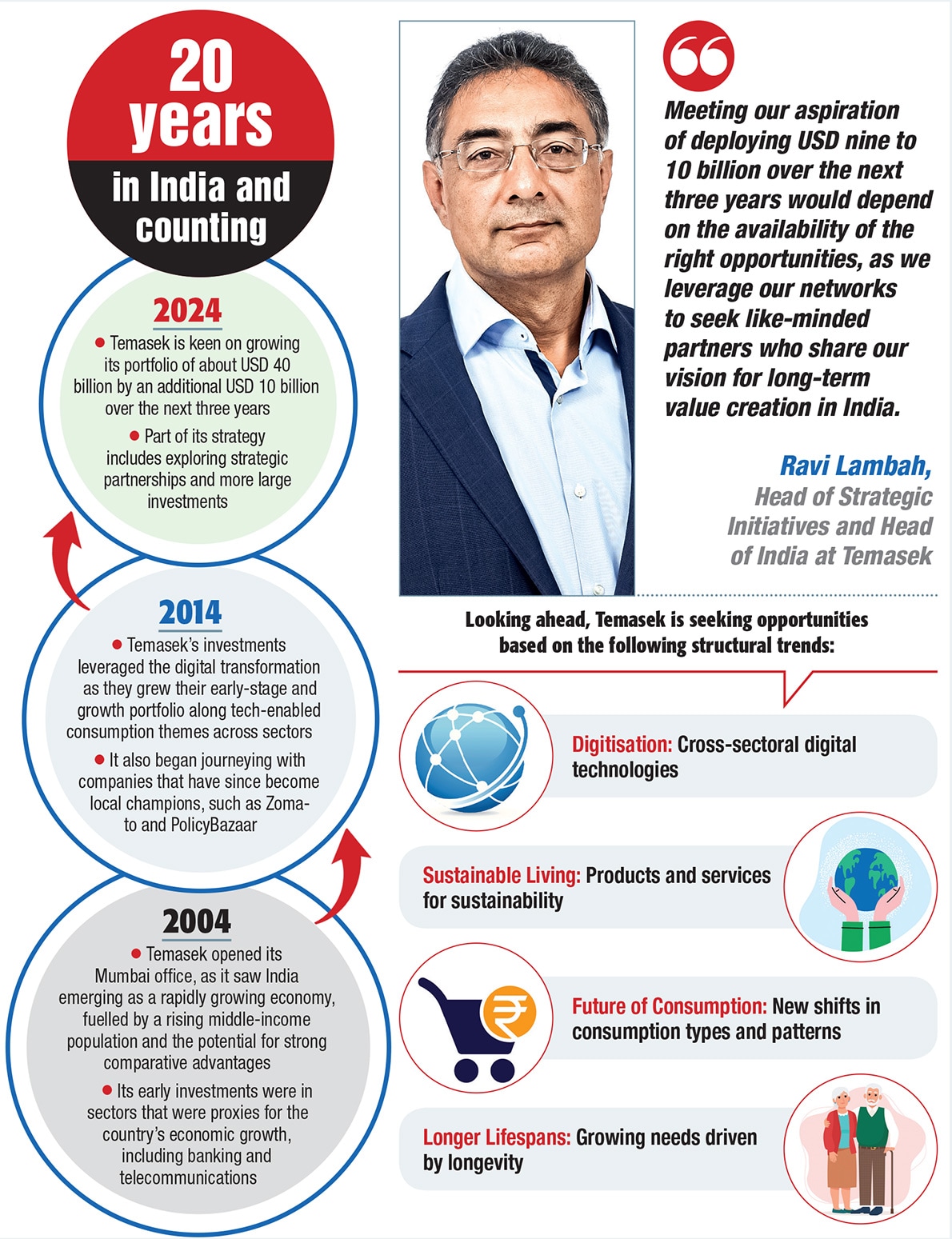
Recognising India’s potential early on, Temasek opened its Mumbai office in 2004, marking the company’s first active investment office outside Singapore. Twenty years later, its India exposure of about US$40 billion underscores its long-term commitment to the market.
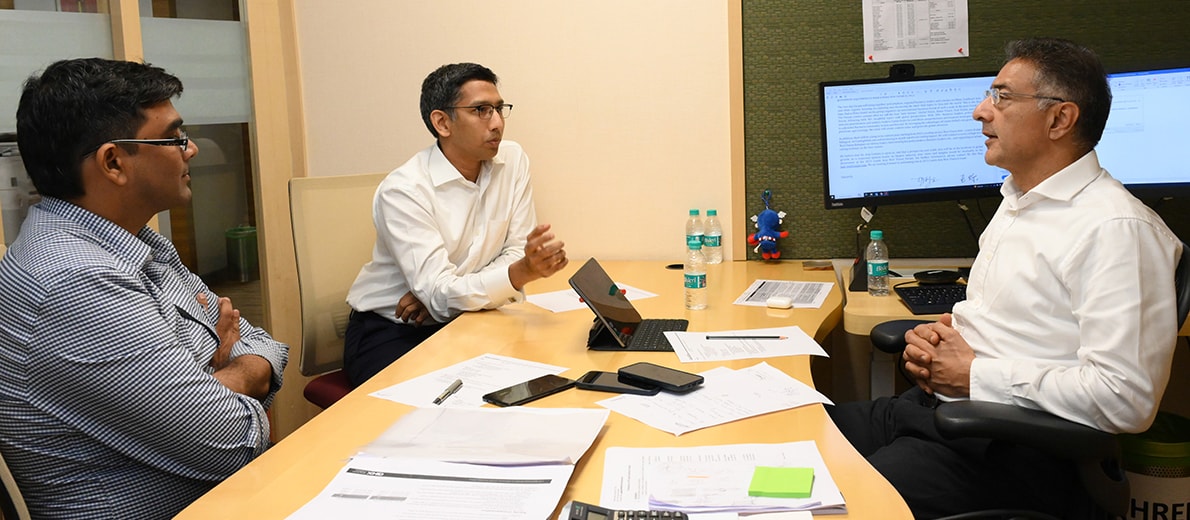
Ravi Lambah, Head of Strategic Initiatives and Head of India at Temasek, shares more about its history in India, as well as plans to invest up to US$10 billion over the next three years.
Why did Temasek first start investing in India?
This was part of our efforts to expand across Asia in the early 2000s. Having benefitted from the growth of our portfolio companies in Singapore, we sought fresh opportunities based on then-emerging trends. India was among the markets on the cusp of expansion, fuelled by growing middle-income populations and a significant need for infrastructure development. The country had implemented economic reforms in the early 1990s and joined the World Trade Organisation, opening its economy further. With conditions moving in the right direction, we took a long view and committed to investing in India’s transformation.
What was Temasek’s initial focus? How has it evolved?
In the early days, we focused on companies that mirrored the growth of India’s domestic economy, particularly in sectors such as banking and telecommunications. For instance, with the middle-income population rising, we identified a need for more sophisticated financial services to meet growing aspirations, further leading to investments in ICICI Bank and HDFC Bank. We also sought opportunities that capitalised on India’s comparative advantage as a globally competitive resource base for products and services, such as biopharma, healthcare, IT, business process outsourcing, and automotive components.
About a decade later, we found the next wave of investible opportunities in digital transformation. We gradually expanded our early-stage and growth portfolio, backing tech-enabled start-ups aligned with consumption themes. Companies like Zomato and PolicyBazaar, whom we were fortunate to partner with at their early stages, have since grown into market leaders.
We believe four structural trends will continue to shape future tailwinds in India, persisting through economic cycles: Digitisation, Future of Consumption, Sustainable Living, and Longer Lifespans.
What differentiates Temasek as a value-adding investor?
We aim to deliver a forward-looking and resilient portfolio that can withstand market cycles and deliver compounded, sustainable returns over the long term. To this end, we invest off our own balance sheet into both listed and unlisted markets, with a diversified exposure spanning companies at different growth phases.
At the early stage, our subsidiary Vertex Ventures Southeast Asia & India provides venture capital to start-ups at their seed and series A/B rounds, focusing on the growth potential of the digital economy in these regions. Our joint venture platforms also offer debt financing solutions–InnoVen Capital India provides venture debt financing for start-ups and growth-stage companies, while EvolutionX Debt Capital focuses on growth capital for technology and digital economy companies.
For our direct investments, we have taken on opportunities to acquire both minority and majority stakes across early-to-growth-stage opportunities, as well as stakes in established players. This multi-stage breadth gives us unique insights, enabling a more informed and sharper investment focus. For instance, in the sustainability space, we established Schneider Electric India Pvt Ltd (SEIPL) in 2020 as part of a joint venture with Schneider Electric, acquiring Larsen & Toubro’s electrical and automation business. The combination created significant efficiencies by leveraging on the complementary businesses of both entities and positioned SEIPL as a major player in electrification, automation, and digitalisation.
Similarly, in healthcare, we hold a majority stake in Manipal Hospitals— now India’s largest hospital chain by beds. Initially, we entered with a minority stake, but our shareholding grew as we saw stronger alignment with our portfolio objectives. Every decision is made with an owner’s mind-set, guided by a global perspective. While Manipal’s management team is focused on running their day-to-day operations, we serve as a bridge to the rest of the world, connecting the hospital chain to global best practices and cutting-edge technologies.
As an asset owner, we constantly leverage our strengths to enhance shareholder value. We partner our portfolio companies through their boards and management teams to ensure that they remain well positioned for long-term growth, amidst broader global developments. We also engage them regularly on their strategic business direction, including areas such as ESG. Given our extensive global network, we drive portfolio synergy initiatives through collaboration among portfolio companies, tapping on their differentiated capabilities and expertise. We also enable access to a wider pool of investors and partners through established relationships with other LPs and corporates, potentially leading to new co-investment and value creation opportunities.
Finally, what is Temasek’s India outlook? Where are the emerging opportunities?
Over the last decade, India has been our best-performing market globally, and we continue to see strong structural drivers supporting its future growth. The political and regulatory environment remains stable and conducive for investment, while reforms in taxation, infrastructure development, financialisation, and production-linked incentives have established a solid foundation for growth; we expect these to continue under the current pro-business government.
The country’s willingness to open key sectors, such as defence, to foreign investment and reduce tariff barriers reflects its commitment to further liberalisation. We believe this positions the country at a much stronger starting point in the context of today’s geopolitical risks.
India’s capital markets have rallied since the days of the COVID pandemic in 2020 and remain largely resilient. Despite volatility from foreign outflows, we see a meaningful offset from domestic inflows, comprising both retail, and institutional buying. For example, in October 2024, domestic mutual funds saw US$6 billion of equity inflows that partially offset the US$10.9 billion outflows by foreign investors. In fact, domestic capital now constitutes a much larger share of India’s equity markets. In an upward-trending market, should domestic capital continue to support the market, rising valuations create some challenges for foreign capital to re-enter, except in times of corrections. We actively monitor our positions, applying our intrinsic value test. Where we see the potential for compounding returns, we continue to hold our investments and where we see value ahead of potential, we may trim our positions.
Domestic consumption continues to be a key theme, driven by India’s favourable demographics and its manufacturing advantage. Real GDP per capita has nearly doubled since 2010 to US$2,480 and has significant catch-up potential. Beyond digitalisation, we are also excited by opportunities aligned with the green transition, such as electric mobility, energy storage technology, and green hydrogen. Further, we also see an excellent opportunity to partner with like-minded entrepreneurs and investors, to deploy incremental capital into India.
This content was first published in The Economic Times and was republished with permission.