The era of artificial intelligence (AI) is upon us. Once seen as just a buzzword, AI is already reshaping businesses and how they operate today.
Take financial services, a key sector in Temasek’s investment portfolio. A World Economic Forum (WEF) report found that 85% of financial services companies are currently using AI, and over three in four expect AI to become essential to their business by 2022.
“AI has tremendous potential across every industry, including financial services. It pushes enterprises to make smarter and more efficient systems,” says Michael Zeller, Head of AI Strategy and Solutions, Temasek.
The business opportunity alone is compelling. According to a McKinsey study, AI could unlock an additional US$2 trillion of annual value for banking and insurance companies globally. In addition, banks and insurance companies already play an outsized role in society by providing various integral services. With the right AI strategy, this industry could efficiently meet societal needs while expanding economic opportunity.
1. Improving customer experience
By leveraging big data and AI, banks and insurance companies will be able to better understand their customers. This empowers them to improve their offering with personalised products and services, shifting from a product-centric approach to one that puts customers first. AI-powered chatbots and virtual assistants can also improve the customer experience by providing on-demand, automated help.
3. Increasing efficiency
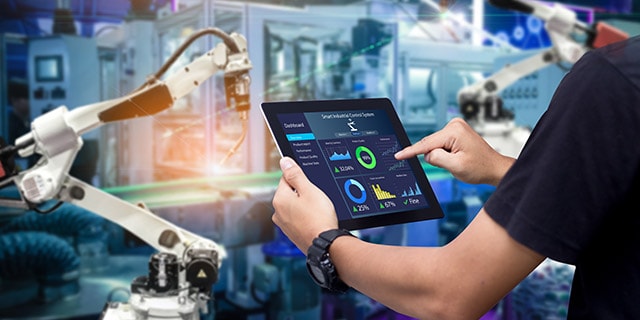
That said, there is still a place for automation within the financial services sector. It could help increase efficiency through the automation of routine work. Temasek’s check-ins found that the top use of AI among the banks and insurance companies surveyed is in extracting data from documents, be it salary statements or claims reports.
Relieving humans of such routine tasks could free up their time to focus on higher-value work. This is in line with the findings of WEF’s Future of Jobs report, which predicted that the nature of work may change for employees. Such a move will be beneficial for individuals and businesses, said the WEF, as these enhanced jobs allow people to be “creative, strategic, and entrepreneurial.”
“We must recognise the value of retaining human experience. We should not ‘de-skill’ humans faster than we can ‘re-skill’ them,” says Temasek’s Zeller.
To do so will involve banks and insurance companies taking on a human-first approach when designing and deploying AI — a key tenet of responsible AI. With the increasing adoption of AI in financial services, “building AI ethics and governance capabilities that address the ‘why’ and 'how' of trust-enhancing actions in the adoption of AI is critical,” advises Zeller.
To truly capture the opportunity of AI in financial services, companies must design and deploy such solutions responsibly. How can they do so in the absence of a standardised AI Ethics and Governance framework? Download this report to find out.