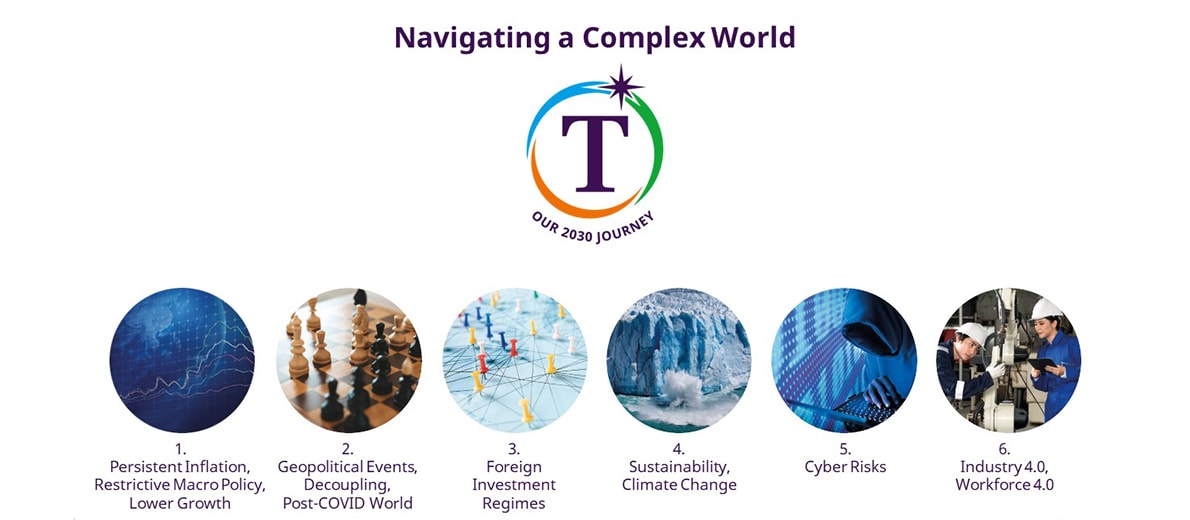
Around 2018, however, a decision was made to tweak this approach. “The whole environmentfor our portfolio companies was getting much more complex,” Hamiyeh said, pointing to geopolitical, macroeconomic and other disruptive risks. “We felt it wasn’t enough.”
In November 2019, Temasek announced a new portfolio development function that would “adopt an active approach to enhancing the value of our core assets through partnerships, innovation, growth strategies and/or restructuring”.
In practical terms, Hamiyeh said, this has led to a dedicated team whose focus is working with portfolio companies on resilience and value creation. Members of the team might even be seconded to companies to learn the ropes and develop an “operating mindset”.
Results from these engagements might include strategic reviews, changes to business models and capital structures, and connections with new talents and companies.
In the case of Keppel, for instance, the result has been a reorientation of focus. Keppel shed its offshore and marine business, identified assets for sale, and now refers to itself as an asset management company.
Its stock has risen over 70 per cent since it announced it would be selling Keppel Offshore & Marine to what was then Sembcorp Marine. Last year, Keppel was the secondbest performing stock in the Straits Times Index – after Sembcorp Industries.
The portfolio development team can also draw on skillsets from across the Temasek group. This might include legal experts or those with experience in mergers and acquisitions, for instance, depending on what is needed.
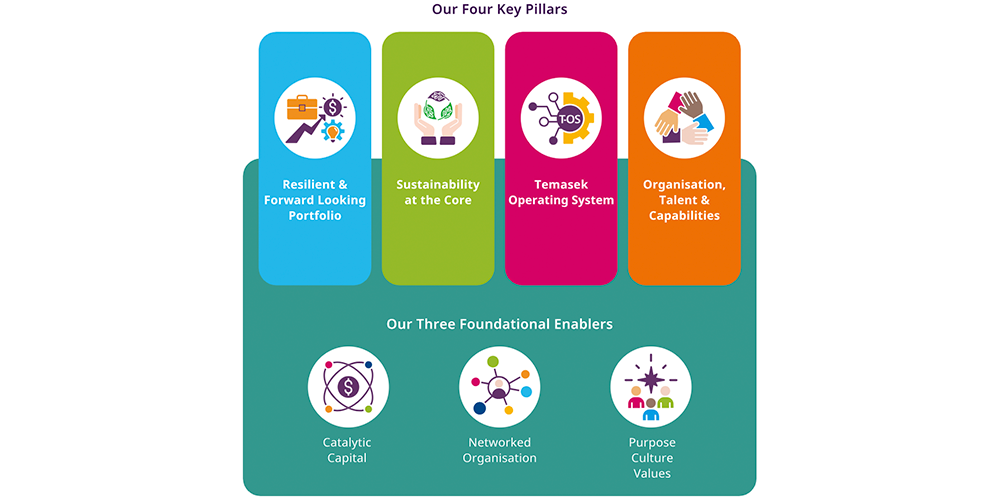
On top of this, Temasek portfolio companies can tap the Temasek Operating System (T-OS). This is a curated network of entities specialising in one of five themes: artificial intelligence, blockchain, cybersecurity, data and digital, and sustainable solutions.
“This is a suite of services,” Hamiyeh said. If a portfolio company wants to digitise its processes, it can go to a T-OS company called Temus. If it needs cybersecurity solutions, it can get these from Istari and Ensign.
“Regardless of whether a company needs help in terms of pivoting or transforming, these are… tools for them to take advantage of.”
To take this active investment approach to its next phase, Hamiyeh said Temasek is “seriously considering having inhouse operating specialists”.
Such specialists might include former chief financial officers who can help companies optimise their balance sheets, or procurement specialists who can look into supply chain improvements.
Temasek’s new approach bears some resemblance to that of a private equity firm seeking to transform companies and extract value.
The likes of Blackstone, KKR and CVC are known for their active ownership and the networks of specialists and professionals they make available to portfolio companies.
One key difference is Temasek’s long-term horizon. “The capital that we invest is capital proprietary to our balance sheet,” Hamiyeh said. “We can stay invested much longer.”
Temasek takes a long-term and holistic view of its portfolio, he added. Its T2030 strategy has two components: a dynamic component that seeks higher returns in unlisted and early-stage investments, and a resilient component that can “withstand exogenous shocks”. The Singapore portfolio companies form part of the resilient component, which is to constitute 60 to 70 per cent of Temasek’s total portfolio.