A needed lifeline
Dhurkka had planned to breastfeed, but the emergency surgery and early delivery meant she was not producing milk. Despite receiving lactation support, the challenge persisted. “I was in so much pain,” she recalls. With a colleague’s support and guidance, she was finally able to start expressing just 2 ml of milk at first, less than half a teaspoon.
This was a critical period for Ashrithan, whose digestive system was too immature for formula.
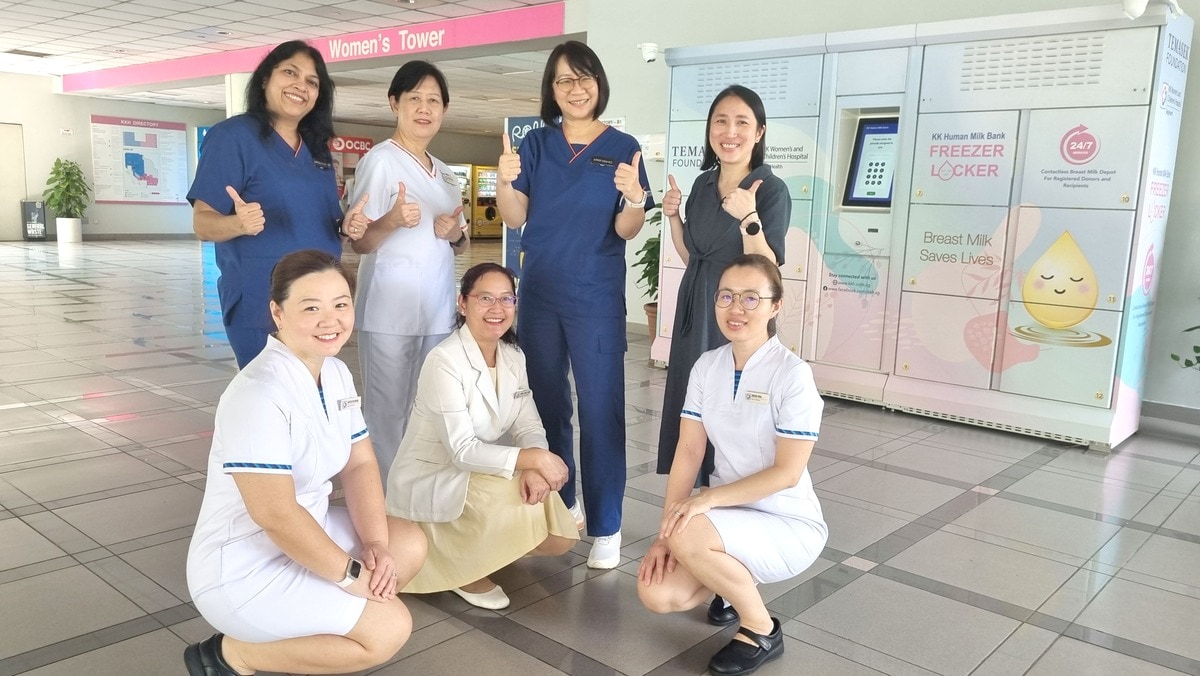
Hope arrived in the form of Singapore’s first and only donor human milk bank programme, supported by Temasek Foundation and run by KK Women’s and Children’s Hospital (KKH). The programme was mainstreamed by the Ministry of Health in April 2024.
Through the programme, her son received safe, pasteurised donor human milk while Dhurkka built up her own supply. “I had no reservations because I knew the milk had been screened and pasteurised. I was only thinking about the benefits of breast milk for my premature child,” she recalls.
Ashrithan, who spent 18 days in hospital, received 2.3 litres of donor milk, bridging the gap until Dhurkka’s own supply could be established. “It definitely took the pressure off, knowing he was receiving the breast milk and nutrients that he needed,” she says.
A stronger start to life
Behind Ashrithan’s story is years of work to close a critical gap for Singapore’s smallest patients.
What began as a pilot backed by Temasek Foundation was mainstreamed as a national programme by the Ministry of Health in April 2024. The KK Human Milk Bank now supports all eligible preterm and sick infants, whether in hospitals or in the community.
As of March 2026, the programme has provided more than 22,000 litres of donor milk to over 9,000 infants, helping to raise exclusive human milk feeding rates for vulnerable infants from 20% in 2017 to over 98%. It has also helped reduce the incidence of necrotising enterocolitis (NEC) – a severe life-threatening gastrointestinal disease in preterm infants – from 5.6% to below 2%.
The programme has attracted interest from other health ministries in the region where they are engaging with KKH as an expert partner to replicate this milk bank freezer locker system locally.
“The KK Human Milk Bank’s success shows that when we identify a critical healthcare gap and approach it with dedication and careful planning, we can create sustainable solutions that transform lives for families and generations to come,” says Associate Professor Chua Mei Chien, Director of the KK Human Milk Bank.
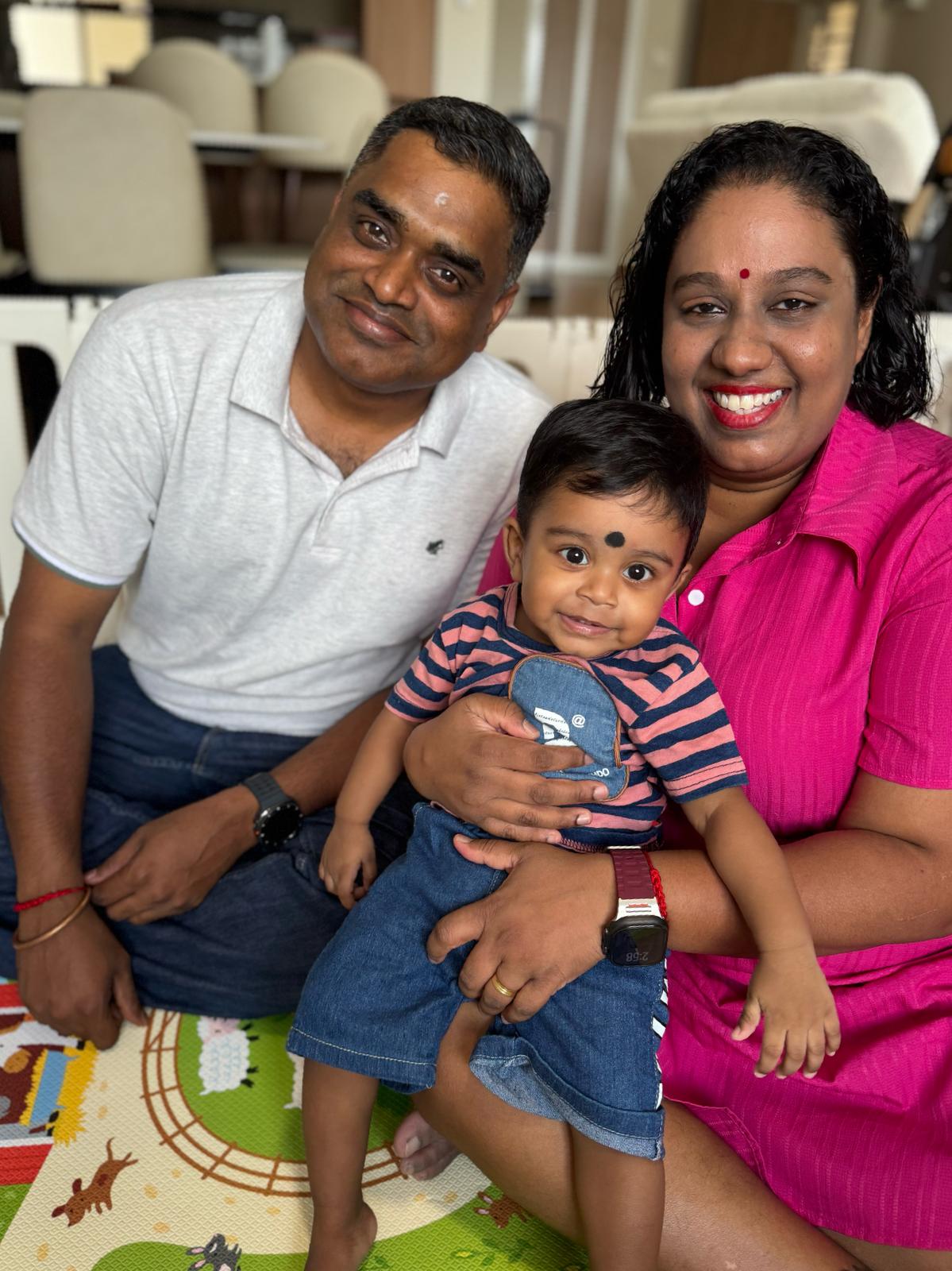
For Dhurkka, it all comes down to one little boy.
Today, Ashrithan is a healthy, active toddler. “At each follow-up visit, when we hear that Ashrithan has gained weight and grown taller, we’re happy,” she says.
The experience has left Dhurkka grateful for the programme and the support that made it possible. Her hope is that more expectant mothers learn about the programme, and that raising awareness about the option becomes a formal part of antenatal care.
“If your child needs breast milk you can’t provide, then milk from another mother can give him the nutrients he needs,” she says.
For her, that’s what matters most. “Ashrithan is a big, strong boy now. That’s every mother’s hope.”
Enhancing access to breast milk
Breast milk provides newborns with essential nutrition and immune protection. However, preterm and ill infants often lack access to their mother’s milk.
In 2016, Temasek Foundation partnered with KK Women’s and Children’s Hospital (KKH) to establish and scale Singapore’s first and only donor human milk bank. This ensured timely access to donor milk, giving infants the best chance for survival and healthy growth, while reducing the length of hospital stays. Its support also enabled international training, stringent safety protocols, and the development of innovative solutions like a 24/7 contactless milk depot.
Addressing cultural sensitivities, maintaining transparent processes, and building public trust were essential to gaining support for the programme. For example, consultations with Singapore’s Islamic authority, MUIS, assured the community that the use of donor milk for premature Muslim infants was aligned with religious guidance.
Over 22,000 litres of donor milk have been provided to more than 9,000 infants. This has meant that over 98% of vulnerable infants received human milk exclusively in 2024, up from 20% in 2017. The incidence of NEC fell from 5.6% to below 2%.
Temasek Foundation’s early support laid the groundwork for a service that was mainstreamed by Singapore’s Ministry of Health in April 2024. The programme’s reach continues to grow as it attracts interest from health ministries around the region from Malaysia to India.
About Temasek's Community Contributions
Temasek’s journey in building social capital started over 20 years ago, when it adopted a deliberate and structured approach, anchored on the twin pillars of governance and sustainability, to give back to communities.
Since 2003, Temasek has been setting aside a portion of its net positive returns above its risk-adjusted cost of capital for community gifts.
These community gifts are approved by the Temasek Board and then donated to partners to achieve Temasek’s community objectives of Connecting People, Uplifting Communities, Protecting the Planet, and Advancing Capabilities.
Temasek Trust (TT) has been the primary beneficiary of Temasek’s gifts. The Trust disburses grants for programmes to be developed and delivered by Temasek’s non-profit ecosystem, including Temasek Foundation, Temasek Life Sciences Laboratory, Stewardship Asia Centre, and Mandai Nature.
In addition to Temasek Trust and its non-profit ecosystem, Temasek also works directly with partners from the Public, Private, and People sectors to advance its community objectives in areas where its philanthropic capital, network, and industry insights can make the most impact.
About Temasek Foundation
Temasek Foundation supports a diverse range of programmes that uplift lives and communities in Singapore and beyond. Temasek Foundation programmes are made possible through philanthropic endowments gifted by Temasek, as well as gifts and other contributions from other donors. These programmes strive towards achieving positive outcomes for individuals and communities now, and for generations to come. Collectively, Temasek Foundation’s programmes strengthen social resilience, foster international exchange and regional capabilities, advance science, and protect the planet.