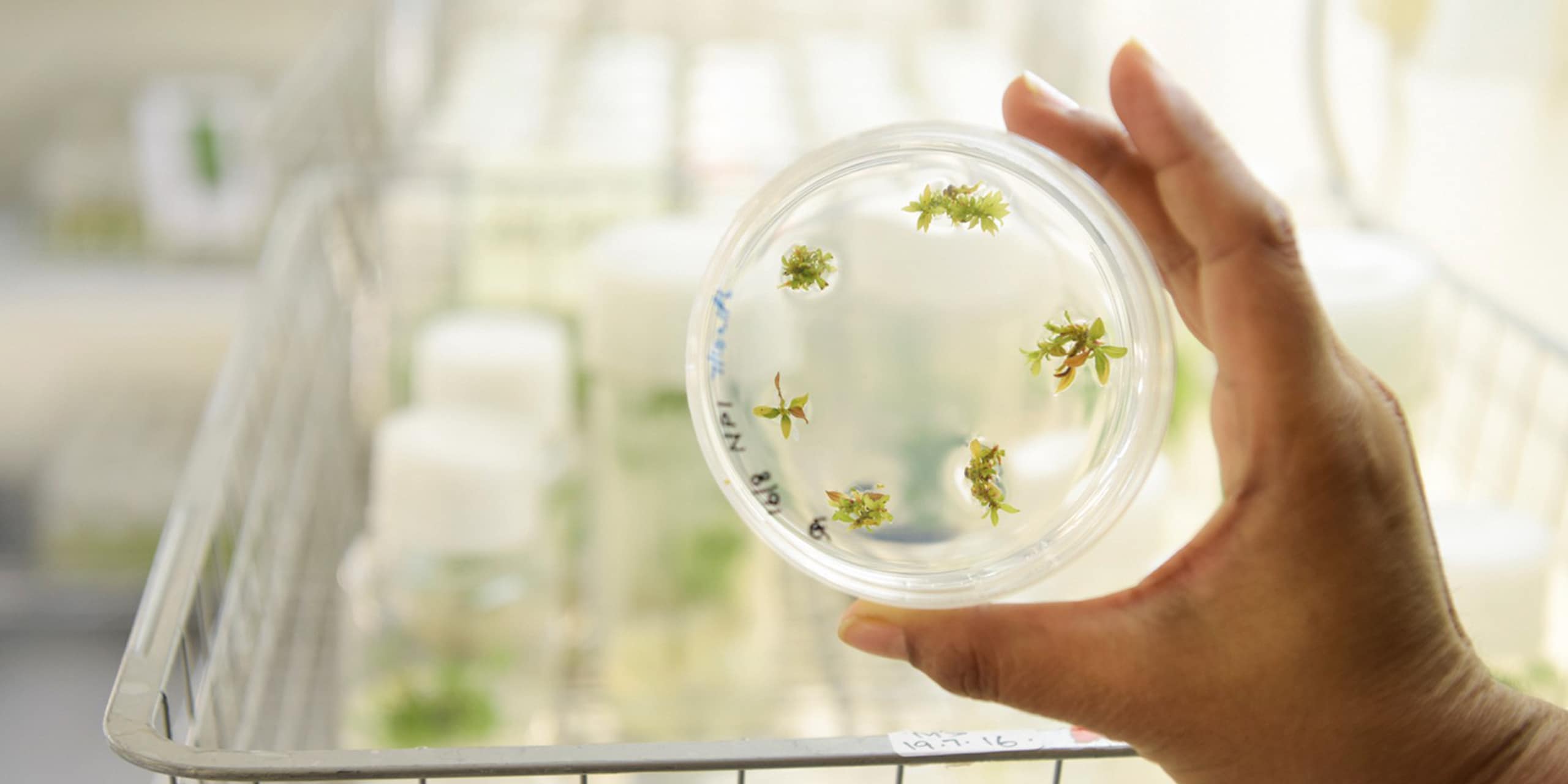
Micropropagated shoots inside a petri dish in the tissue culture room at the Temasek Life Sciences Laboratory (TLL)
Some nine billion people will call Planet Earth home by the year 2050, according to the United Nations Food and Agriculture Organisation (FAO). While that might potentially widen the dating pool, a pressing question surrounding this swell is: how do we feed everyone?
Rising income and prosperity, especially in developing countries like China and India, have led to changing diets. More people are adopting a richer diet, which means a higher demand for meat, eggs and dairy. This, in turn, increases demand for crops to feed the animals we need for food. Coupled with the projected 1.4 billion extra people we’re expecting, it’s clear that we need to come up with more food — 50 percent more than we make now, according to The World Bank. However, this is not an easy task.
First off, there is climate change, which affects crop yields due to rising temperatures and changing weather patterns. We are also consuming and depleting natural resources at an alarming rate. Over 85 percent of the world’s fisheries have reached their natural limits and some species, like the Atlantic blue tuna, are close to endangered levels.
There’s an urgent need to fix our food woes to mitigate scarcity and rising costs — but how? Here are four food-related problems we face today and how we will solve them:
Problem 1: A Surge in Demand for Meat
Growing affluence has led to an increased demand for animal-based food. Global meat production has surged from 50 metric tonnes per year in 1960 to 200 metric tonnes per year in 2000. The number is expected to climb to 450 metric tonnes annually in 2050. That’s roughly 1.8 million servings of steaks.
In turn, more crops are required to feed growing herds of livestock. Conventional farming puts a big strain on Earth’s resources. According to UN scientists, animal agriculture emits more greenhouse gases than all forms of transportation combined, due mostly to methane released from cattle.
Solution: More Efficient Ways of Raising Livestock
A shift from using standard feed crops to those from residues of crop production can lower the footprint of animal-based food production. According to a report titled “Disruptive Technology and the Prospects for Responsible Innovation in Agribusiness” by Wageningen University and Research, 70 percent of the biomass produced in cropland systems lie unused as wasted residuals anyway. Future technologies will make sure that these by-products can be turned into sustainable animal feeds.