Overcoming the “yikes” factor
This is not Mr Wang’s first foray into the vegetarian market. His grandparents led the way as street vendors selling vegetarian food before his father, a food scientist, set up their family vegetarian food manufacturing plant.
His own entrepreneurial experience in plant-based food started when he created vegetarian seafood dishes for his daughter, who is allergic to seafood. Encouraged by a friend, he decided to open a business – and Sophie’s Kitchen, named after his daughter, was born.
Now, he hopes to build on the first startup’s success. He believes that microalgae protein could power a circular economy as it relies on food waste for production.
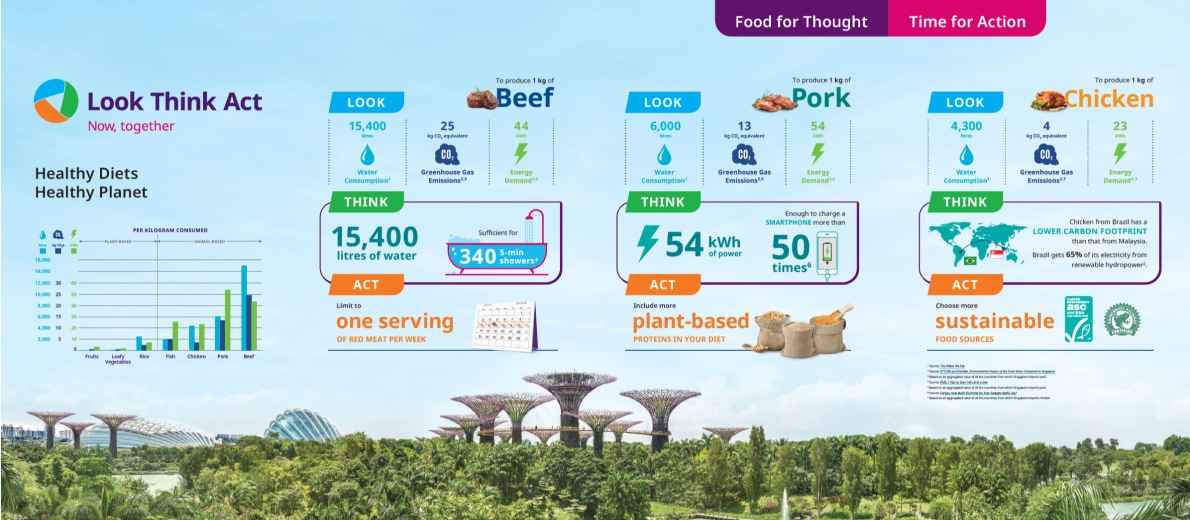
Research has also shown that people who consume less red meat and dairy have a lower carbon footprint. With the growing human population, climate change and increasing ethical concerns around animal agriculture, he hopes he can scale up his idea to be the carbon neutral protein solution the world desperately needs.
“One tonne of our plant-based proteins uses less than 0.02 hectares of land, compared to almost 141 hectares needed for one tonne of beef proteins,” Mr Wang pointed out.
However, for that vision to be realised, he has to first convince people to switch diets. Luckily, plant-based diets are becoming more and more popular as the result of protein pioneers such as Beyond Meat, Impossible Foods, and now, Sophie’s Kitchen.
“This will require capital and the right team to educate food manufacturers on how best to use our protein in their products. We expect this will be relatively easy because we will cut their food costs significantly without sacrificing nutrition.”
“Beyond Asia, when you talk about microalgae, there’s a ‘yikes’ effect, until we explain that it is just the salad of the sea. Microalgae comes with a lot of health and nutritional benefits that terrestrial leafy greens simply can’t compete with,” he added.
With nearly half the capital required to produce a commercial product now secured, he has already set his sights much further. His final frontier is space – providing astronauts with microalgae-based food in the future.
“If a suitable microalgae strain is found, it can even be grown in open space on Mars,” he quipped.