Close

Beyond the Brink: A New Horizon For Conservation

Beyond the Brink: A New Horizon For Conservation

Minute Read 0 views

They used to run when she got close.

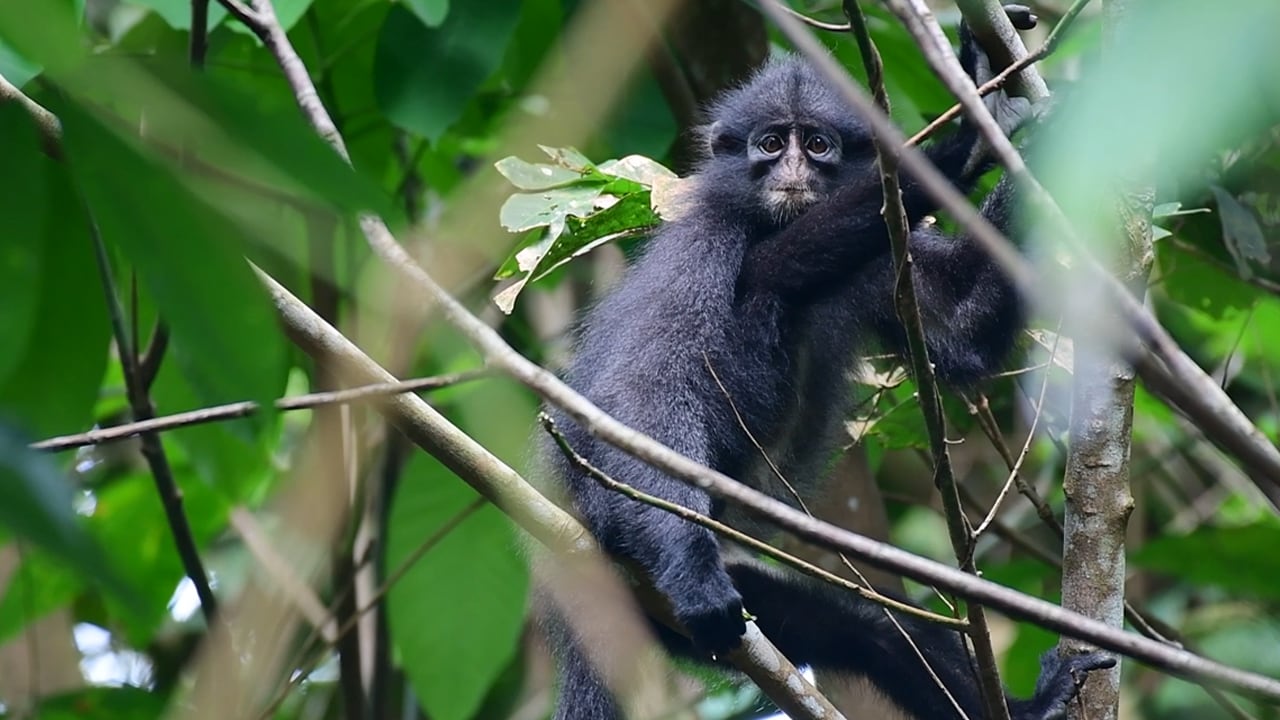
It was 2008 and Dr Andie Ang – then a postgraduate – was tracking the elusive Raffles’ Banded Langur as part of her master’s research. For two years, she would slip into Singapore’s Central Catchment Nature Reserve before the sun cleared the canopy – same bag, same clothes, same routine. The idea was to become unremarkable. 

“It was about consistency – same look, same pace, so they recognise you. You’re not a threat,” recalls Andie, now Head of Species Grants and Impact at Mandai Nature. “Eventually, they stopped running.”

Andie’s passion for conservation was sparked in her teens, when she helped repatriate a trafficked monkey. That early experience triggered a lifelong curiosity about primates. Years later, a symposium she attended focused her attention on the Raffles’ Banded Langur. 

It wasn’t until I heard Professor Tommy Koh speak at the launch of the second edition of the Singapore Red Data Book that I realised this species was on the verge of extinction. That’s when I thought my master’s project could focus on them.

Dr Andie Ang,
Head of Species Grants and Impact, Mandai Nature

Finding the elusive Langur, however, proved a challenge. Native to Singapore and Malaysia, the black-furred primate was rarely seen. In Singapore, only around 40 were left in the wild at the time.

For weeks, she scoured the Central Catchment, chasing tips from photographers and revisiting historical hotspots. “I was ready to give up before I finally spotted one near Upper Seletar,” she says. 

The sighting became the anchor for her study. She learned what they ate (leaves, mostly), when they moved (early morning, late afternoon), and how they behaved. But knowledge alone could not protect the species. What was needed was long-term funding and support.

From data to action

The turning point came in 2016 when, recognising the importance of protecting this critically endangered species, government partners and conservation organisations convened to map out the first action plan for the Raffles’ Banded Langur.

The initiative was funded by the Wildlife Reserves Singapore Conservation Fund – now the Singapore Conservation Impact Grant under Mandai Nature, a non-profit established by Temasek and the Mandai Wildlife Group. The action plan outlined key priorities, including habitat protection, improved data collection, and public awareness. This led to the formation of the Raffles’ Banded Langur Working Group, which Andie chairs.

To help realise the action plan, citizen scientists were recruited to join the conservation efforts in Singapore. The first round in 2016 drew about 35 volunteers. 10 years on, more than 1,200 volunteers have taken part. Over time, they have provided researchers with valuable on-ground insights into the species’ movements and habits, as well as potential threats.

One critical contribution from the citizen scientists was identifying the plant species the langurs fed on. Species identified as endangered were subsequently reintroduced as part of a restoration effort by the National Parks Board. “Habitat restoration is key. You are ensuring there are enough resources for the langurs to sustain themselves and reproduce,” Andie explains.

Through the collective efforts of the Working Group, the population is slowly growing. As of 2025, there were approximately 80 Raffles' Banded Langurs in Singapore.

“It’s not dramatic,” Andie says. “But that’s what success looks like in this kind of work.”

Securing nature, for tomorrow

Today, Mandai Nature supports 62 conservation projects across Southeast Asia, addressing species protection, climate resilience, and community benefit. These conservation efforts target over 60 threatened Southeast Asian species and protect over 151,000 hectares of critical habitats.

The endowment model that supports Mandai Nature's funding means that efforts are not tied to short-term cycles, so projects such as the langur initiative can adapt and grow over time.

“It shines a spotlight on how important long-term support is, whether monetary or non-monetary,” says Andie. “It’s what makes it possible to stay with a project. You can track what worked and what didn’t, and build from there. Otherwise, you’re always starting over.”

That kind of stability matters when progress is fragile, and a single setback can undo years of gains. In Singapore, this stability enables continued vigilance, including against threats like genetic inbreeding. A smaller, less diverse gene pool jeopardises the species’ survival – a situation exacerbated by roadkill as the langurs attempt to cross the roads between fragmented habitats. 

As recently as 2022, langurs were still being killed by vehicles. “These deaths are concerning… just one incident of roadkill is a significant proportion of the langur population.”

This underscored the importance of engaging all stakeholders, including the government, to implement long-term mitigation measures, such as rope bridges at key crossing spots and road signs reminding drivers to drive carefully near forested areas. Such efforts, while seemingly small, make a big difference.

“It’s easy to lose species quietly,” says Andie. “You don’t even notice until they’re gone. But keeping them? That takes commitment.”


Nature's Lifeline

Southeast Asia is a bio-cultural hotspot, home to around 20% of the world’s plant, animal and marine species. However, rapid urbanisation has placed immense pressure on biodiversity, leading to habitat loss and species decline.

Mandai Nature was established by Temasek and Mandai Wildlife Group to combat these threats. It aims to advance biodiversity conservation and ecosystem restoration across Southeast Asia, working in close partnership with local organisations and communities.

By providing funding, technical expertise and regional collaboration opportunities, Mandai Nature supports and amplifies locally driven efforts to protect threatened species, restore ecosystems, and strengthen community resilience.

Temasek’s long-term philanthropic support enables it to develop sustained, multi-year conservation programmes that go beyond short-term grant cycles. This stability allows partners to focus on meaningful outcomes: building deep relationships with local communities, investing in ecosystem restoration, and adapting to long-term conservation needs.

Mandai Nature played a leading role in developing the Species Action Plan for the Raffles’ Banded Langur. It is one of 62 conservation projects supported by Mandai Nature across Singapore and the region. Collectively, these efforts are driving a positive impact for over 60 threatened Southeast Asian species.

By safeguarding wildlife, these projects protect the ecosystems that are vital for climate resilience, as well as the livelihoods and wellbeing of local communities.
 

Protecting the critically endangered Raffles’ Banded Langurs that live here on this island is our small contribution to making the world a better place. It feels great to know we’re making a difference through the citizen science programme, which is simple enough for kids to take part in too.

Katherine Kim, a citizen scientist who volunteers with her daughters

About Temasek’s Community Contributions

Temasek’s journey in building social capital began over 20 years ago, when it adopted a deliberate and structured approach, anchored on the twin pillars of governance and sustainability, to give back to communities.

Since 2003, Temasek has been setting aside a portion of its net positive returns above its risk-adjusted cost of capital for community gifts. Approved by the Temasek Board, these gifts are donated largely to Temasek Trust (TT) to achieve Temasek’s community objectives of Connecting People, Uplifting Communities, Protecting the Planet, and Advancing Capabilities.

Temasek’s primary community stewardship arm is the Temasek Trust Collective (TTC), an ecosystem of organisations united by a shared purpose of building better for every generation.

Mandai Nature is the conservation arm of Mandai Wildlife Group. Mandai Nature develops and delivers on conservation programmes at scale to avert extinction of the most threatened species in Southeast Asia.

Beyond the TTC, Temasek gives directly to its partners in the Public, Private, and People sectors to maximise the impact of its capital, network, and insights.
 

Top

News & Insights

Select a type of content
    Please select Stories you are interested in.
    Please give us your consent.
    Please confirm that you are not a robot.

    Subscribe to our newsletter

    Stay up to date with our latest news, insights and stories

    Select a type of content
      Please select Stories you are interested in.
      Please give us your consent.
      Please confirm that you are not a robot.