The Decarbonising Rice Project, led by Temasek Life Sciences Laboratory (TLL), aims to improve rice productivity and raise farmers’ income and livelihoods, while mitigating greenhouse gas emissions and climate change. From September 2022 to February 2025, small-scale trials in Singapore and Tamil Nadu achieved reductions in methane emission and water consumption by up to 50%. Yields also increased by up to 10%. Building on these results, the project has since progressed to larger-scale trials to validate the solutions developed in earlier pilots. Through collaborations with local entities in India, Laos and Indonesia, TLL has been working directly on farmers’ fields to validate the methodologies with rigorous scientific evaluations.
TLL’s solution is based on two decades of research. The approach combines selecting locally-adapted rice varieties, customising fertiliser formulations and use, and irrigation methods that reduce water use and methane emissions -- all while increasing the farmers’ yields.
Cultivating Resilience in Rice
Rice is a lifeline for millions of smallholder farmers in Asia and a staple for billions, but climate change has made cultivation unpredictable. At the same time, rice cultivation is responsible for approximately 10% of global methane emissions, making its environmental sustainability a growing concern.
Putting Farmers First
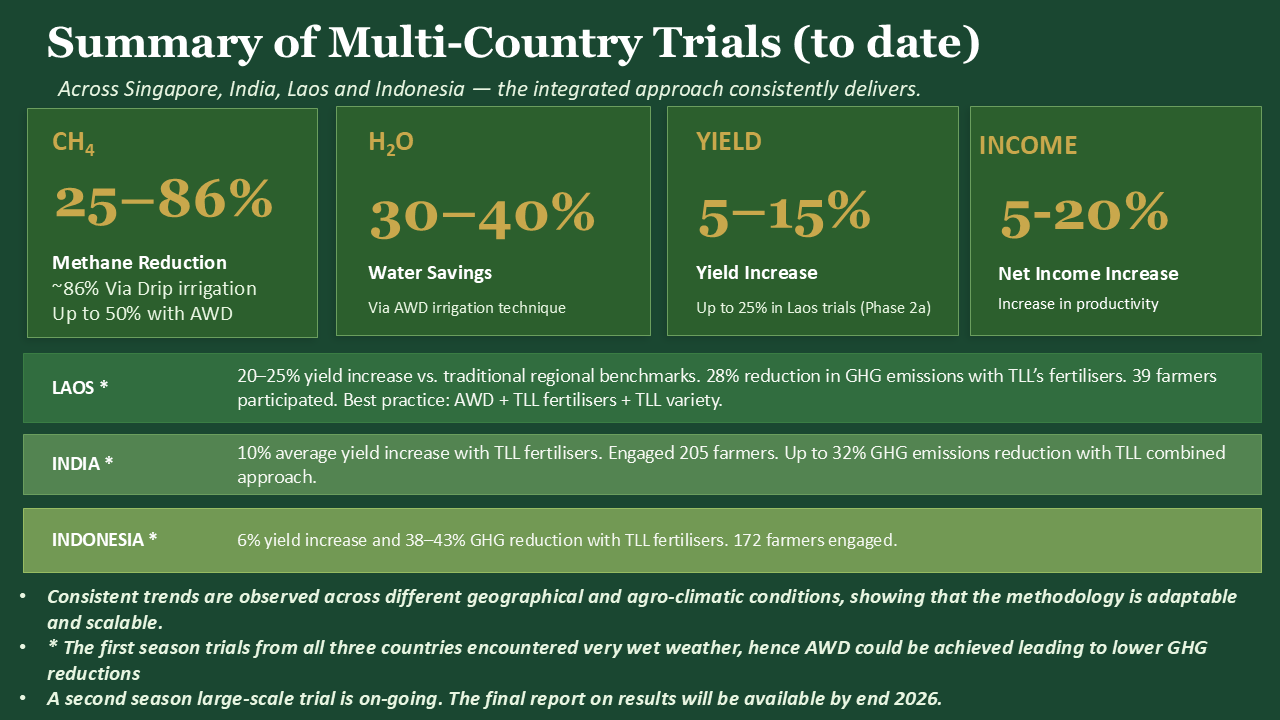
From the first season of large-scale trials in Laos, Indonesia and India, the project has achieved and exceeded its targets, with yield increases of up to 15% versus a target of at least 5% and methane emission reduction of up to 86% versus a target of at least 20%. Additionally, consistent trends were observed across different geographical and agro-climatic conditions, showing that the methodology is adaptable and scalable.
Importantly, farmers witnessed firsthand the positive impact on the yields, health and quality of their harvests in all three regions. They saw that restricting continuous flooding of their rice plot by alternate wetting and drying (AWD) did not harm their crops. In very wet conditions, AWD had yielded healthier crops and higher yields.
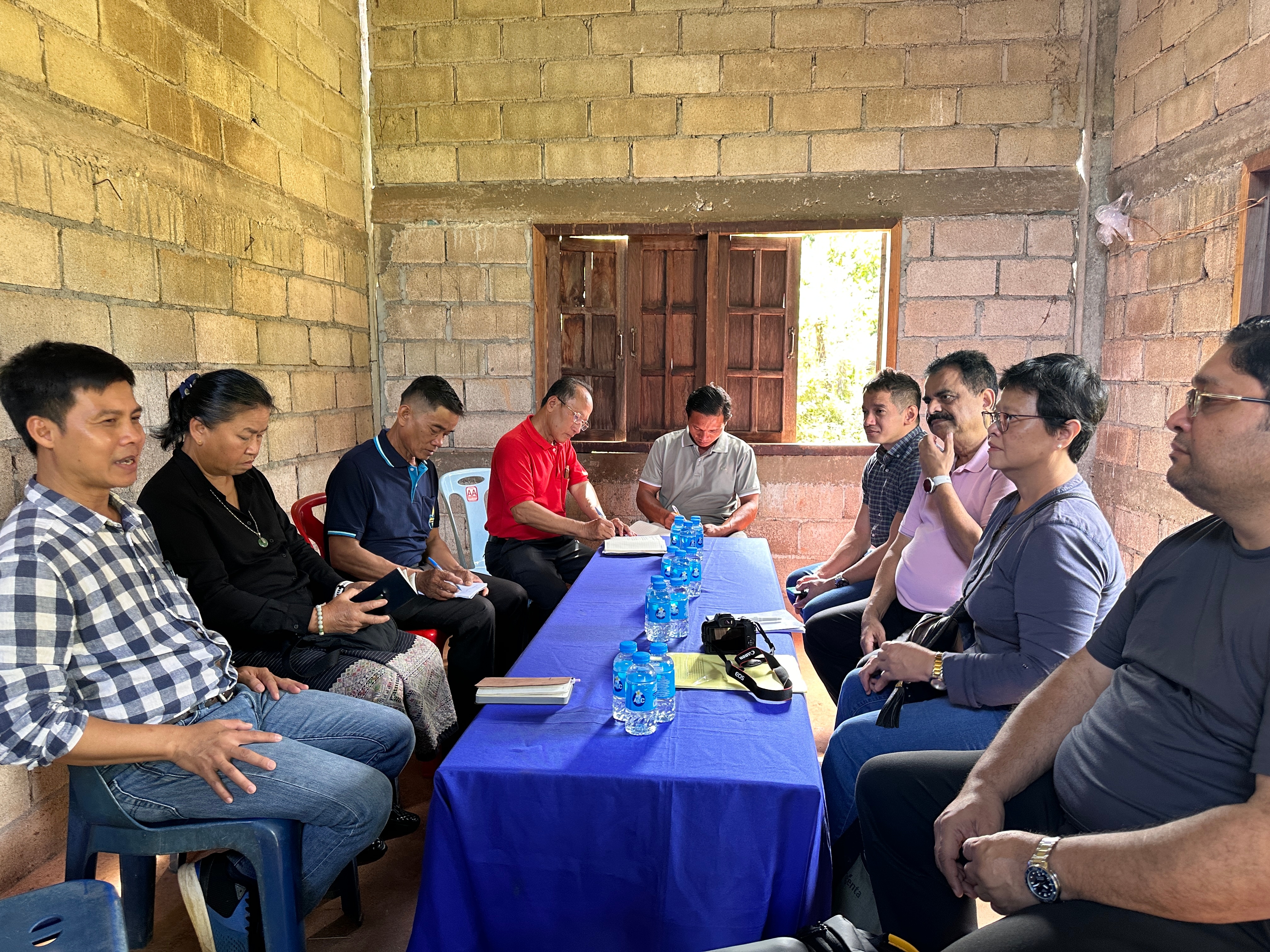
By working alongside smallholder farmers, providing good agricultural advice and TLL’s holistic package of practices, the team has delivered the results that farmers need and gained their trust.
Farmer buy-in, once the hardest part, is no longer the obstacle after the first season’s results were observed.
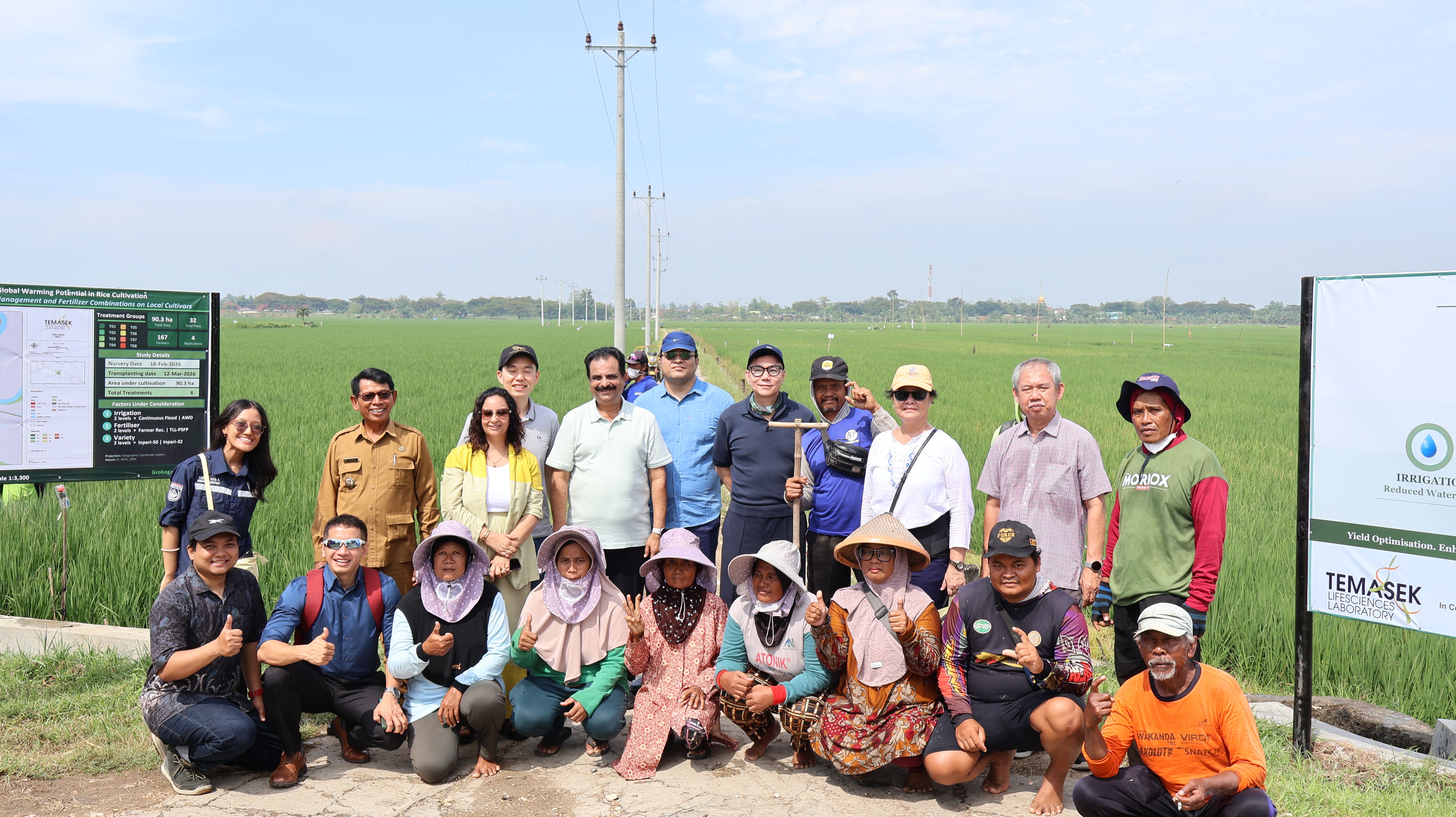
In Grobogan, Central Java, Kasno -- a 55-year-old farmer who has worked the same paddy fields since childhood -- was among roughly 170 Indonesian smallholders who joined the trial last September. His yields went from six or seven tonnes per hectare to eight or nine, and his profits rose by about 30%. "We were worried that changing the methods would lead to a decline or failure in harvest," he said. "But the team took time to meet us, explaining how their method would be better."
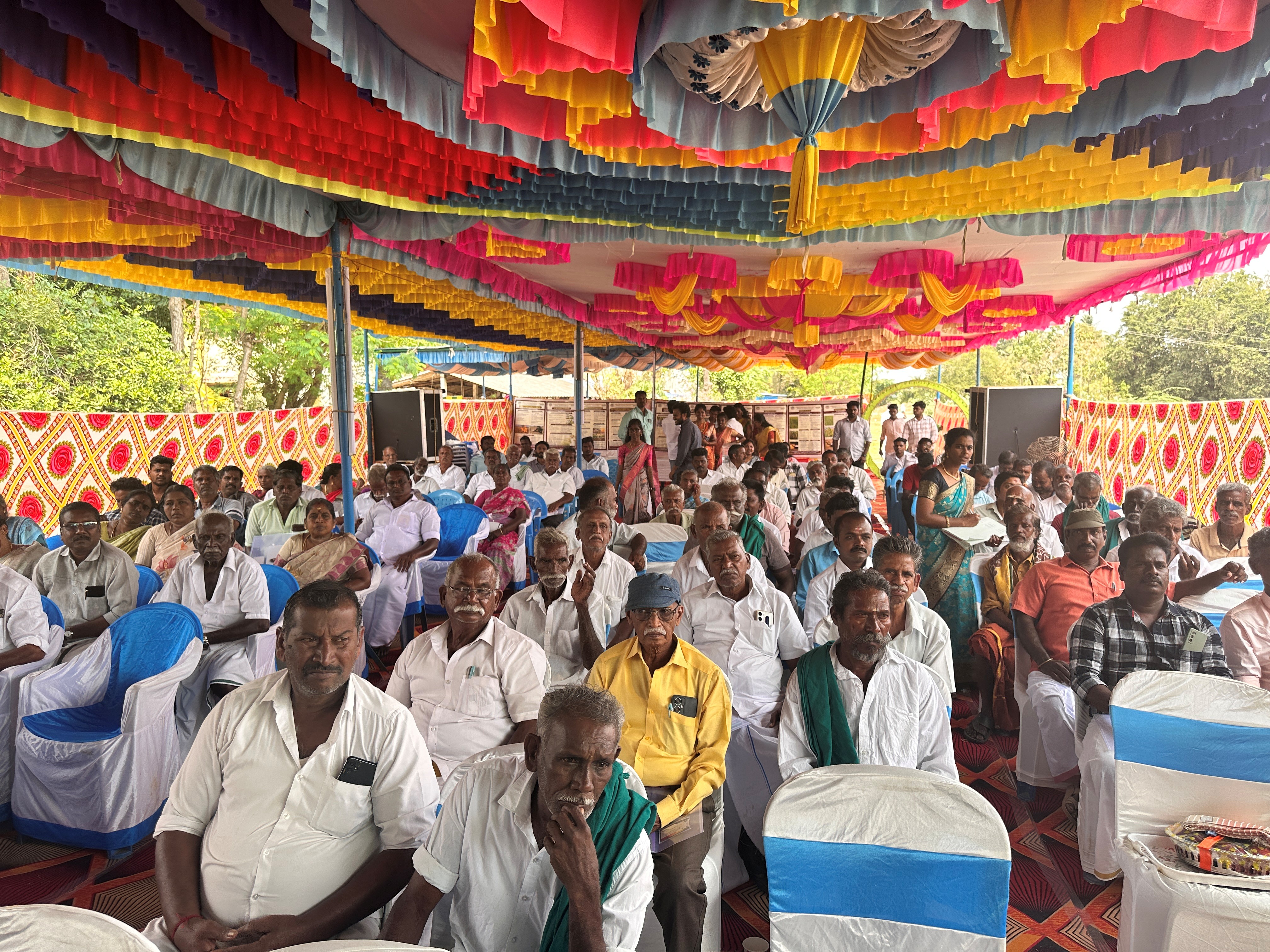
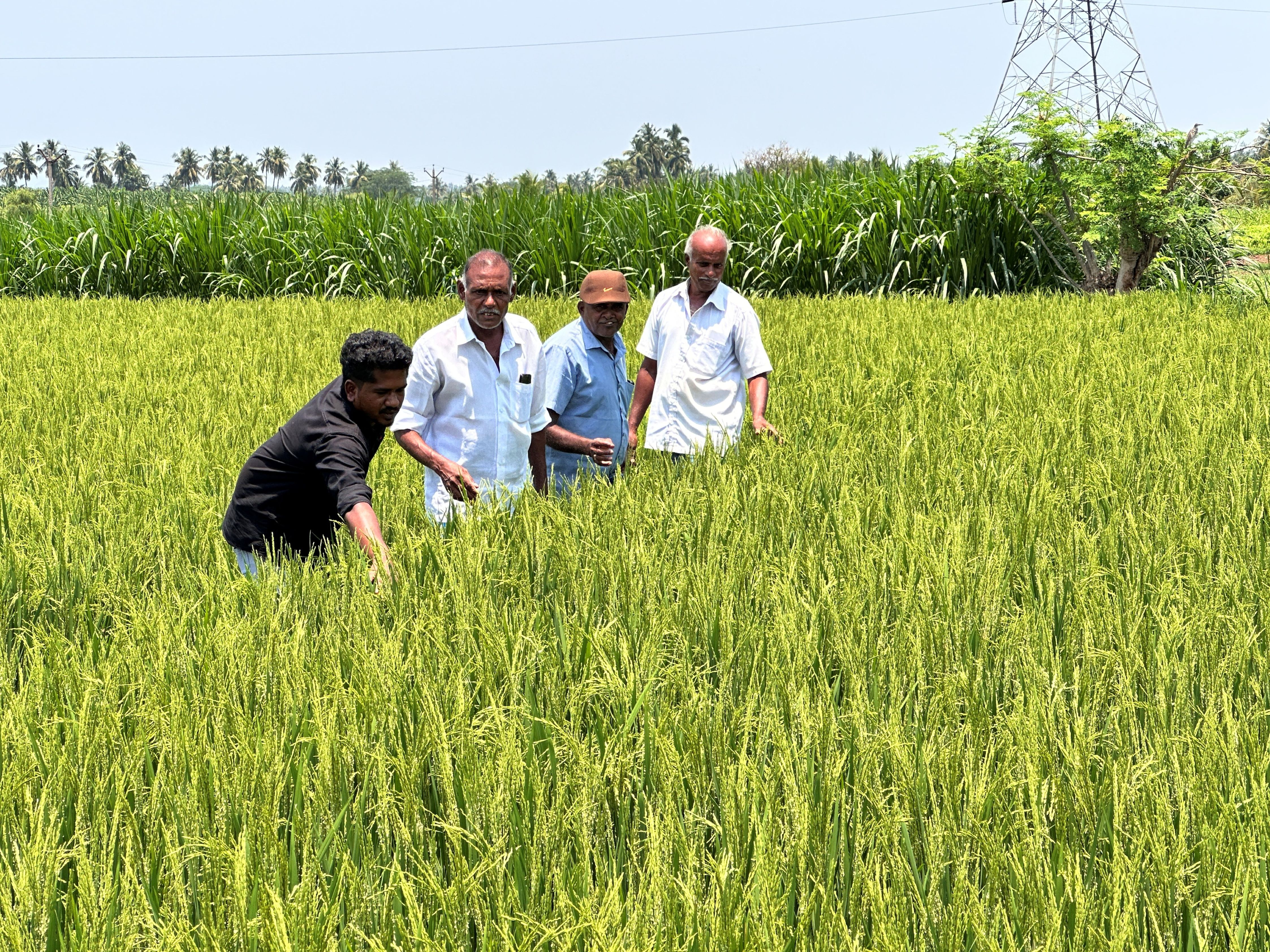
“Smallholder rice farmers in India are happy to see the benefits and increased yields of TLL’s package of practices.” - Farmer representative, India.
“We are happy to continue participating in this project. We learned new technologies and received great support.” - Village Chief & Farmer Representatives, Laos.
Cost savings and yield increases have improved return on investment by 5-20% per crop cycle across the three regions.
A second season of large-scale trials is currently in progress and this phase of the project will conclude by the first quarter of 2027.
Rice for Every Generation
Word has spread.
Other farmers have taken notice of rice fields involved in the project and are interested to join the program in the future.
TLL is planning to scale the impact of their solutions to larger areas, with a target of producing 50,000 tonnes of sustainably grown rice over two years. TLL, working with local implementers on the ground, will train farmers to grow climate-resilient rice varieties, adopt customised and optimised fertiliser mixtures, and implement irrigation innovations such as controlled irrigation for a more resilient future in rice cultivation.
About Temasek's Community Contributions
Temasek’s journey in building social capital began over 20 years ago, when it adopted a deliberate and structured approach, anchored on the twin pillars of governance and sustainability.
Since 2003, Temasek has been setting aside a portion of its net positive returns above its risk-adjusted cost of capital for community gifts. Approved by the Temasek Board, these gifts are donated largely to Temasek Trust (TT) to achieve Temasek’s community objectives of Connecting People, Uplifting Communities, Protecting the Planet, and Advancing Capabilities.
Temasek's primary community stewardship arm is the Temasek Trust Collective (TTC), an ecosystem of organisations united by a shared purpose of building better for every generation.
Temasek Life Sciences Laboratory (TLL) undertakes cutting-edge bio-molecular science research and its applications across a range of life science disciplines. Its work seeks to uncover new translatable knowledge, turning scientific discoveries into real-world impact that benefits people and communities across Asia and beyond.
Beyond the TTC, Temasek gives directly to its partners in the Public, Private, and People sectors to maximise the impact of its capital, network, and insights.


.jpg "580 x 520 - 11")