Potential for growth
Healthtech is expected to be among the driving forces behind SEA’s digital economy, with some 87% of investors surveyed for e-Conomy SEA 2022 forecasting an increase in deal activity in the sector by 2030.
Despite global headwinds and the impact of macroeconomic forces, the region’s digital economy is on track to hit US$200 billion GMV this year – three years earlier compared to expectations in 2016, according to e-Conomy SEA. Propelled by the growing number of internet users – up 100 million to 460 million in the last three years alone – and increasing adoption of digital platforms, the region could unlock up to US$1 trillion through its digital economy by 2030.
Fuelling the growth are e-commerce, financial services, transport & food, online media, and online travel, with investments in healthtech as well as SaaS and Web 3.0 expected to increase over the longer term.
Temasek has made strategic direct investments in companies in several of these sectors, including in e-commerce players Sea Ltd and Carro, on-demand service providers Grab and GoTo in the transport and food space, digital payments provider Nium, and shopping and rewards platform ShopBack.
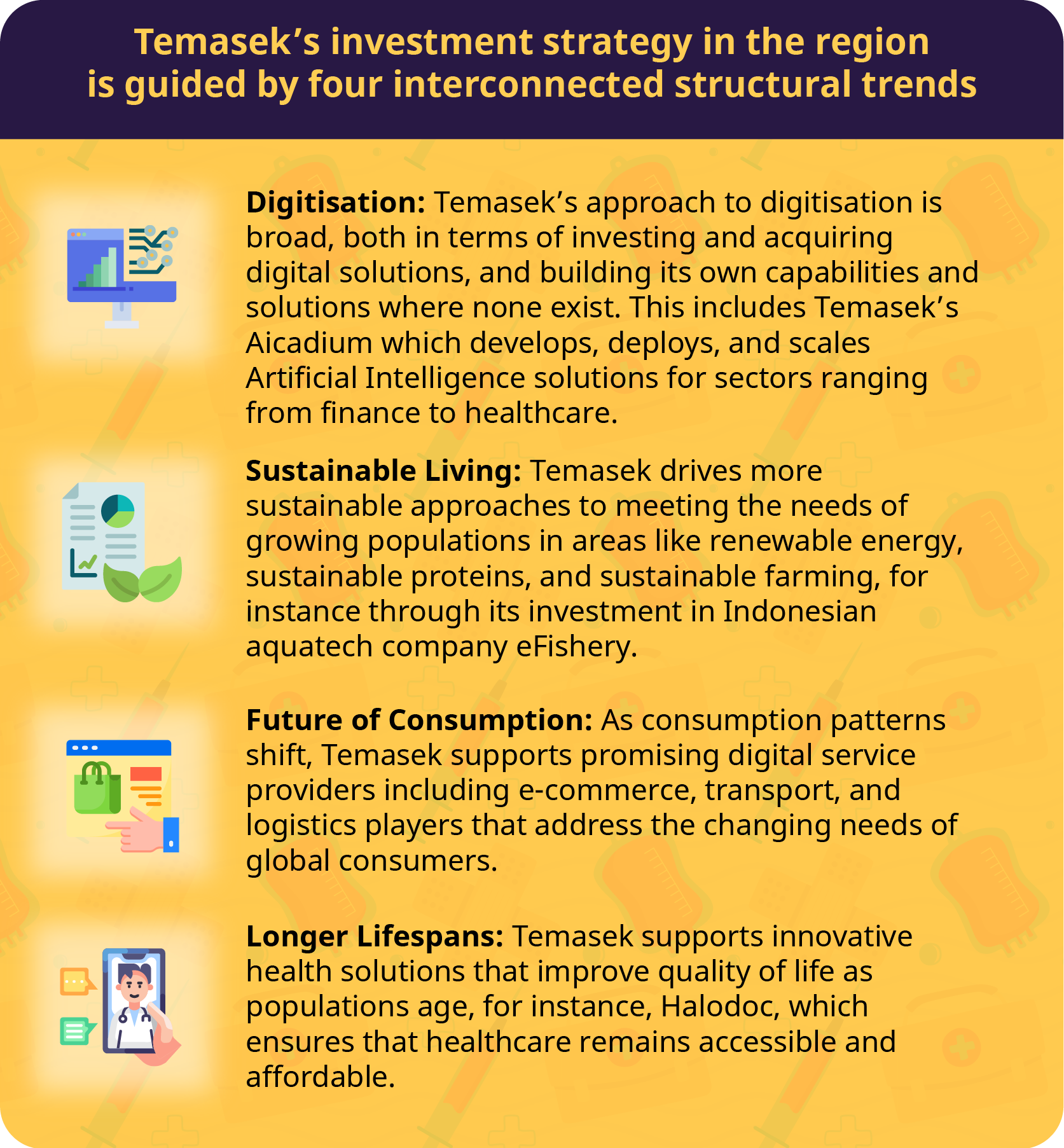
Within healthtech, players like Halodoc have captured Temasek’s interest because of the pressing need to provide accessible and affordable healthcare in the region, says Wai Hoong. The e-Conomy report found that there are typically 1 to 3 hospital beds per thousand people in Indonesia, Vietnam, and the Philippines compared to 13 in Japan, for instance.
“Several key trends have been accelerated and amplified by the COVID-19 pandemic, including growing digital adoption and a higher level of trust in digitally-delivered solutions, laying the groundwork to move even more resources,” says Wai Hoong, adding that key players have aggressively been building out their ecosystems.
This presents several opportunities – deeper engagement with existing customers to grow usage and value, as well as substantial headroom for growth in nascent sectors and unpenetrated markets.
But to realise that growth, barriers that may hamper adoption must be addressed, from affordability and digital literacy to connectivity and finding economically viable ways to extend digital services.




.png)