Electrification and clean energy can contribute to more resilient energy systems, but the appropriate energy mix and transition pathway will differ across markets. Today's infrastructure choices will help determine whether economies lock in new constraints or develop more secure, affordable, and lower-carbon energy systems.
Across recent global convenings in New York, Europe, and Singapore, one question has come into sharper focus: how can economies meet rapidly growing electricity demand while maintaining energy security, affordability, and progress towards lower-carbon systems? Much of the conversation is shifting from ambition to delivery.
For Temasek, energy resilience is an overarching objective. Diversifying supply and adding competitive lower-carbon sources can reduce dependence on concentrated and import-dependent fuel markets. Yet every market has different resources, infrastructure, and demand patterns. Our investment approach therefore considers what each system needs to keep delivering reliable, affordable power as its energy mix changes.
Beyond generation: why energy resilience requires systems integration
Generation remains fundamental, but power must be connected, transmitted, and balanced before it can meet demand. Renewables, supported by battery energy storage systems, are increasingly competitive options for adding capacity and strengthening energy resilience across many markets, benefiting from improving economics and relatively shorter deployment timelines.
Natural gas may continue to play an important role in meeting growing demand and supporting energy security during the transition. However, its continued use needs to be managed carefully, including by mitigating methane emissions and avoiding long-term carbon lock-in. The appropriate energy mix will ultimately depend on each market’s resources, infrastructure, and ability to integrate cleaner alternatives over time.
Those differences become clearer when investors consider the cost of reliable electricity rather than generation alone. Transmission, storage, balancing, and backup capacity can materially affect the economics of supplying power when and where customers need it. A generation project may be attractive on its own terms while the surrounding system requires substantial additional investment.
Building new infrastructure is important, but optimising existing networks unlocks more immediate capacity and efficiency. Grid-enhancing technologies such as dynamic line ratings can help operators determine how much electricity existing transmission lines can safely carry, while demand response and flexible loads can ease pressure at peak times. In addition, improving utilisation and flexibility can help connect additional projects sooner and more cost-effectively than relying solely on new construction.
Electrification and data centres are raising the stakes
The IEA expects electricity consumption to grow at least 2.5 times as fast as overall energy demand through 2030, driven by industry, electric vehicles, cooling, and data centres, among other uses.
The pressure is evident at grid connections. More than 2,500 GW of renewable, large-load, and storage projects are already stalled in grid connection queues worldwide. Delayed connections hold back new supply, while insufficient network capacity can prevent large consumers from securing the power needed for new facilities.
The differing development cycles compound the mismatch. Major grid infrastructure can take five to fifteen years to plan, permit, and complete, compared with one to three years for a data centre. A facility can therefore be ready long before the network needed to serve it.
AI adds concentrated demand for electricity, cooling, and water, but can also be an enabler that helps manage pressure on the system. Better load and renewable-generation forecasts, predictive maintenance, and storage optimisation can improve how operators run existing infrastructure. As explored in our article on AI and the Energy Transition, these gains must be weighed against the additional resources AI itself consumes.
Operational improvements cannot replace the infrastructure that rising demand requires. The challenge is to accommodate new data-centre demand without shifting network congestion or higher costs onto the businesses and communities already served by the grid.
Investing across the energy system
Constraints can lie as much in how electricity is managed as in how much is generated. For Temasek, investing across the energy value chain allows us to help address these challenges at different points in the system.
Grid operation becomes more demanding as the supply mix grows more varied. Our investment in NARI Technology, a provider of smart-grid and power-automation technologies, illustrates how automation and grid control can help manage that complexity. As of 2025, NARI’s wide-area protection and control systems had been deployed to manage more than 1,800 GW of renewable capacity in China.
Where local generation can serve demand without drawing as heavily on shared networks, the commercial opportunity looks different. Luminace owns more than 1,500 MW of installed distributed-generation capacity across North America and serves over 10,000 customers. Bringing supply closer to its users can ease incremental network pressure where local conditions permit.
Commercial viability shapes what can scale
Commercial viability depends on more than whether a technology works. Scaling cleaner energy solutions also requires supporting infrastructure, reliable supply chains, bankable customer demand, and business models that make adoption economically attractive.
For emerging solutions, long-term offtake arrangements and partnerships across the value chain can help provide greater revenue certainty and support investment. For more established solutions, service-based models can reduce upfront costs for customers and encourage wider adoption.
Temasek invests across the corporate lifecycle, from emerging technologies to mature infrastructure. We assess operating performance, deployment economics, execution, governance, and the potential for sustainable, risk-adjusted returns. Ultimately, the challenge is translating technical potential into solutions that can be deployed repeatedly and at commercial scale.
Beyond commercial considerations, successful deployment also requires public trust and community acceptance. Community concerns around land and water use, local benefits, or who bears the cost of network expansion can materially affect permitting and execution. As energy systems transition from fossil fuels toward cleaner sources, it is equally important to manage the shift responsibly, ensuring households and businesses continue to have access to reliable and affordable energy. Early engagement, clear planning and impact assessment, and fair cost allocation are therefore practical enablers of infrastructure delivery, not peripheral considerations.
Matching long-term capital to the requirements of scale
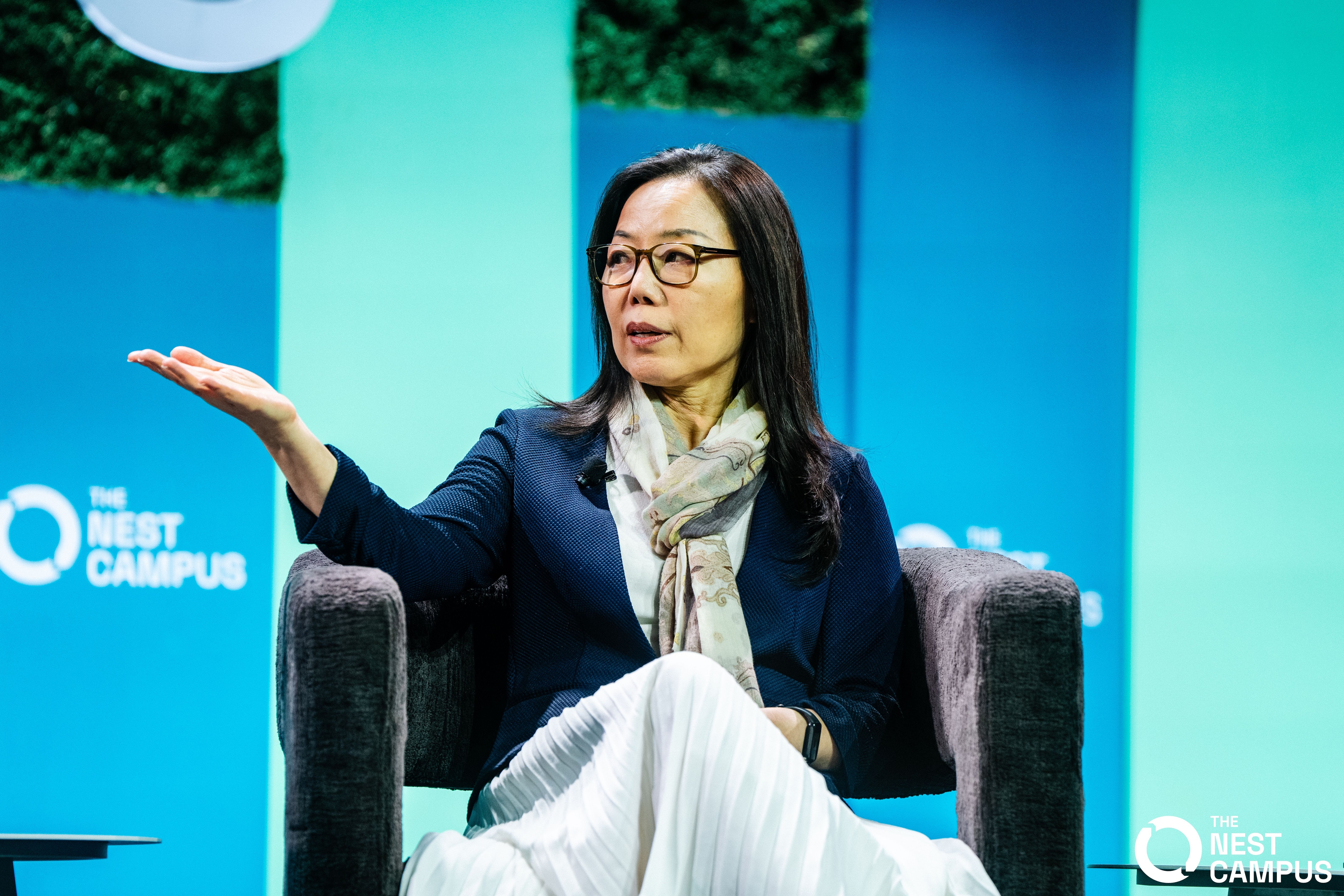
Renewable energy and battery storage are increasingly attracting mainstream infrastructure investment as their technologies mature and economics improve. Elsewhere, particularly in decarbonising hard-to-abate industries, solutions face higher upfront costs, longer payback periods, and less established demand, making it harder to attract conventional capital in an environment of higher financing costs and competing investment priorities. At the Nest Campus panel Who writes the trillion-dollar check? during Climate Week NYC, Temasek Chief Sustainability Officer Kyung-Ah Park described this uneven progress as a “two-speed transition”. The barriers to scale differ across these opportunities, and so does the type of capital they require.
A technically proven innovative solution, for example, may still need growth capital to expand production, become cost competitive, and reach customers. Decarbonization Partners, established by Temasek and BlackRock, invests in late-stage venture and early-growth businesses developing decarbonisation solutions. Its focus addresses the gap between technical proof and commercial deployment at scale.
Other opportunities may have commercial scale and proven economics, but struggle to attract conventional finance because unfamiliar market risks remain difficult for investors to bear. Through the Green Investments Partnership, Temasek has contributed both commercial and concessional capital to improve bankability and attract additional investment into sustainable infrastructure in Asia. Such structures can address identifiable financing barriers relating to emerging markets in the region without substituting for underlying commercial viability.
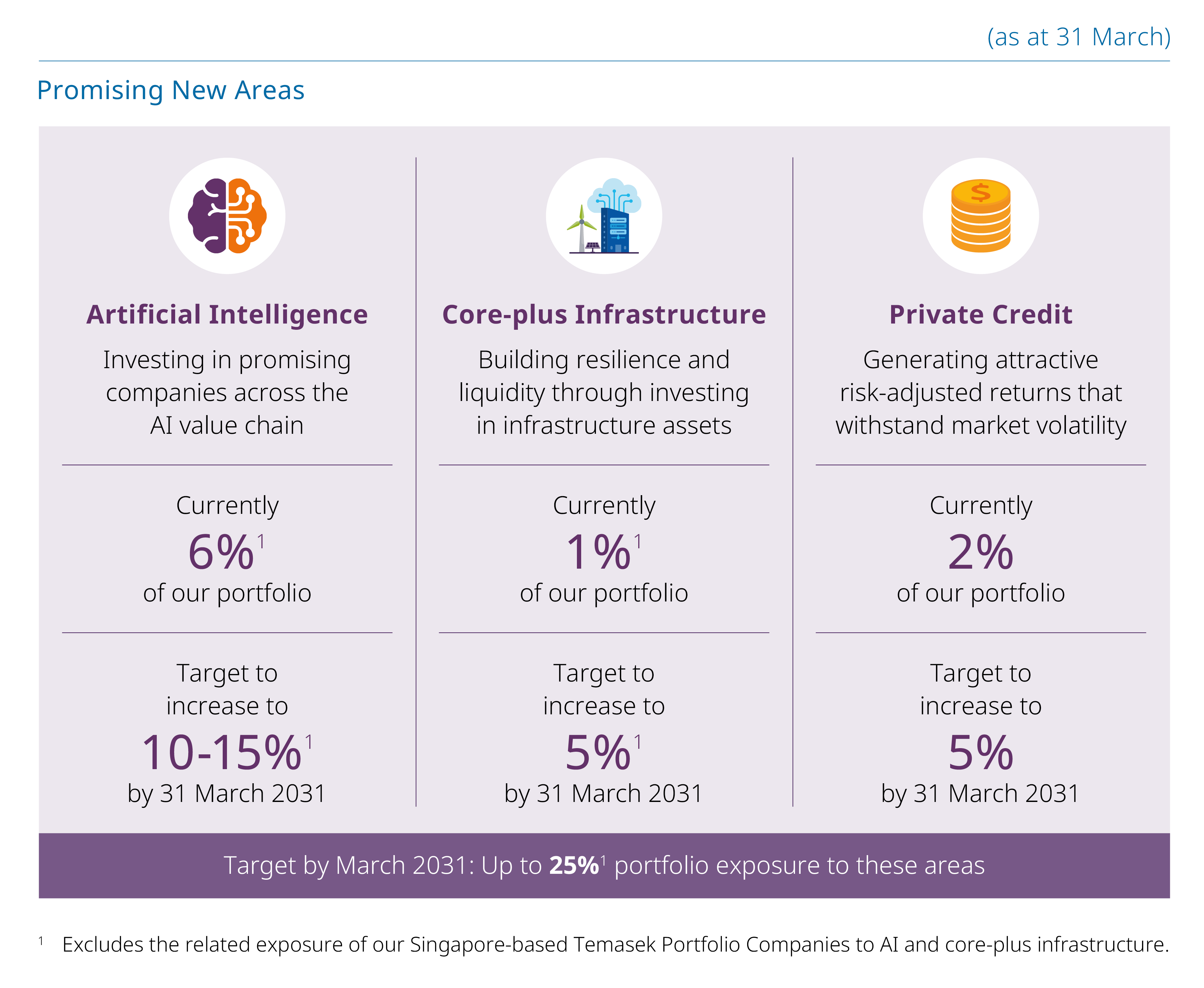
Assets with long operating lives and demand supported by essential services and structural trends are a good fit for long-term commercial investments, subject to construction, regulatory, and operating risks. Core-plus infrastructure currently represents around 1% of Temasek’s portfolio value, with a target of 5% by 31 March 2031. The opportunity includes grid modernisation, renewable and nuclear energy, storage, and other decarbonisation platforms that have characteristics beyond those of traditional infrastructure.
Across these stages, a longer investment horizon can support development and scaling when the underlying economics justify it. Financing costs, policy predictability, and execution remain decisive in determining whether those opportunities can deliver long-term sustainable returns.
Reliable power increasingly influences decisions well beyond the energy sector: where to build a factory, when to expand a data centre, and what it costs to operate either. Building a cleaner, more resilient energy system is therefore not only an energy challenge, but increasingly a question of economic competitiveness. The solutions that endure will be those that can be financed, deployed, and scaled while continuing to deliver reliable, affordable, and sustainable energy.