What are Nature-based Solutions (NbS)?
Nigel: They’re exactly what their name suggests. If you think of our natural world – whether forests, wetlands, grasslands, marshes or even marine environments like kelp forests – these natural systems have been absorbing atmospheric carbon and regulating the Earth’s climate for millions of years. NbS encompasses a range of strategies to conserve, restore, and sustainably manage these natural and modified ecosystems.
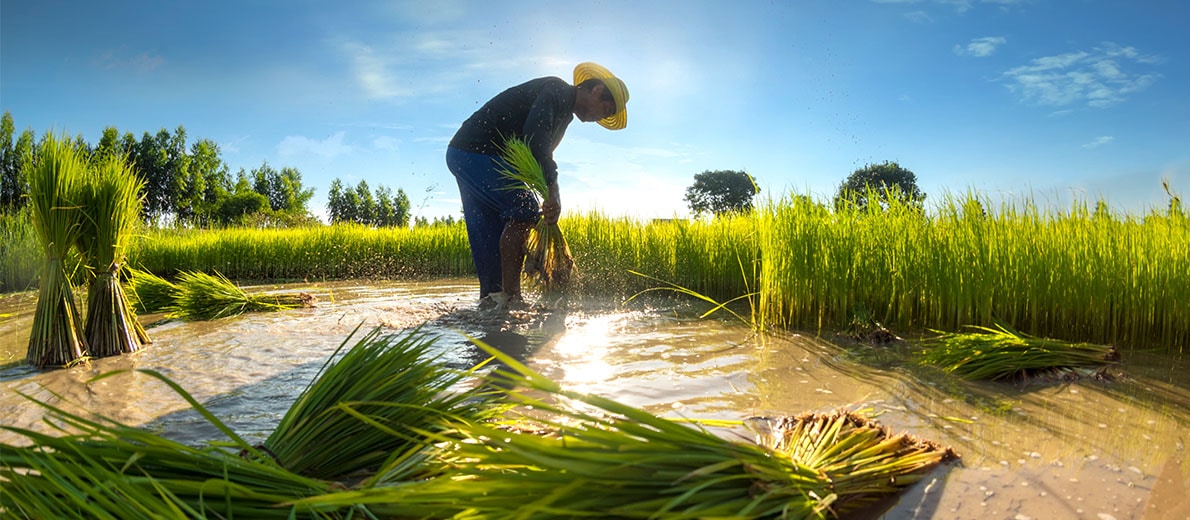
Andrea: Trees are nature’s most established and effective carbon capture technology. But NbS extend far beyond forests. Peatland restoration, regenerative agriculture, and innovative approaches like alternating wet and dry rice cultivation, which is used in Asia to reduce methane emissions, are all examples of established NbS projects. Blue carbon projects, focused on conserving and restoring coastal ecosystems like mangroves and salt marshes, represent another vital category of NbS, leveraging the significant potential of these habitats to store – or sequester – carbon.
Why are NbS so important? And why now?
Andrea: NbS are critical now because we are at a tipping point in the climate crisis. The world is not on track to limit global warming to 1.5°C above pre-industrial levels, and the consequences of inaction are becoming increasingly dire. The increased frequency of extreme weather disasters all around us underscores the urgent need for action. NbS can get us back on course. They are readily available tools that are capable of delivering up to a third of the emission reductions and removals needed by 2030 to meet the Paris Agreement targets and keep global warming below critical thresholds. They are not just important, they are essential to getting us back on track.
Nigel: The important thing to remember is that it is not too late – but we must take action now. There is awareness and consensus that this is a crisis we need to address. We have the technologies, partnerships and capital to make a difference. At Temasek, for instance, we are working to reduce the net carbon emissions attributable to our portfolio to half of 2010’s levels by 2030, and to achieve net zero by 2050.
How do we know that NbS really make an impact? Can we measure it?
Nigel: We know that NbS have an impact because their carbon reductions or removals are quantified through a rigorous process called Measurement, Reporting, and Verification (MRV). It is only after this process is validated and completed that carbon credits, or standardised and tradable units of carbon that capture their impact, can be issued. These credits can be bought, sold, transferred or exchanged in carbon markets.
Andrea: Beyond carbon credits, NbS offer a wealth of additional benefits. Unlike some promising but nascent technologies, NbS are ready for implementation today. Most projects are cost-effective and the co-benefits are substantial, ranging from biodiversity improvements and habitat protection to positive impacts on the lives and livelihoods of local communities. This combination of near-term climate impact, cost-effectiveness, and positive co-benefits makes NbS a particularly compelling approach to addressing climate change.