Every wardrobe hides an environmental cost.
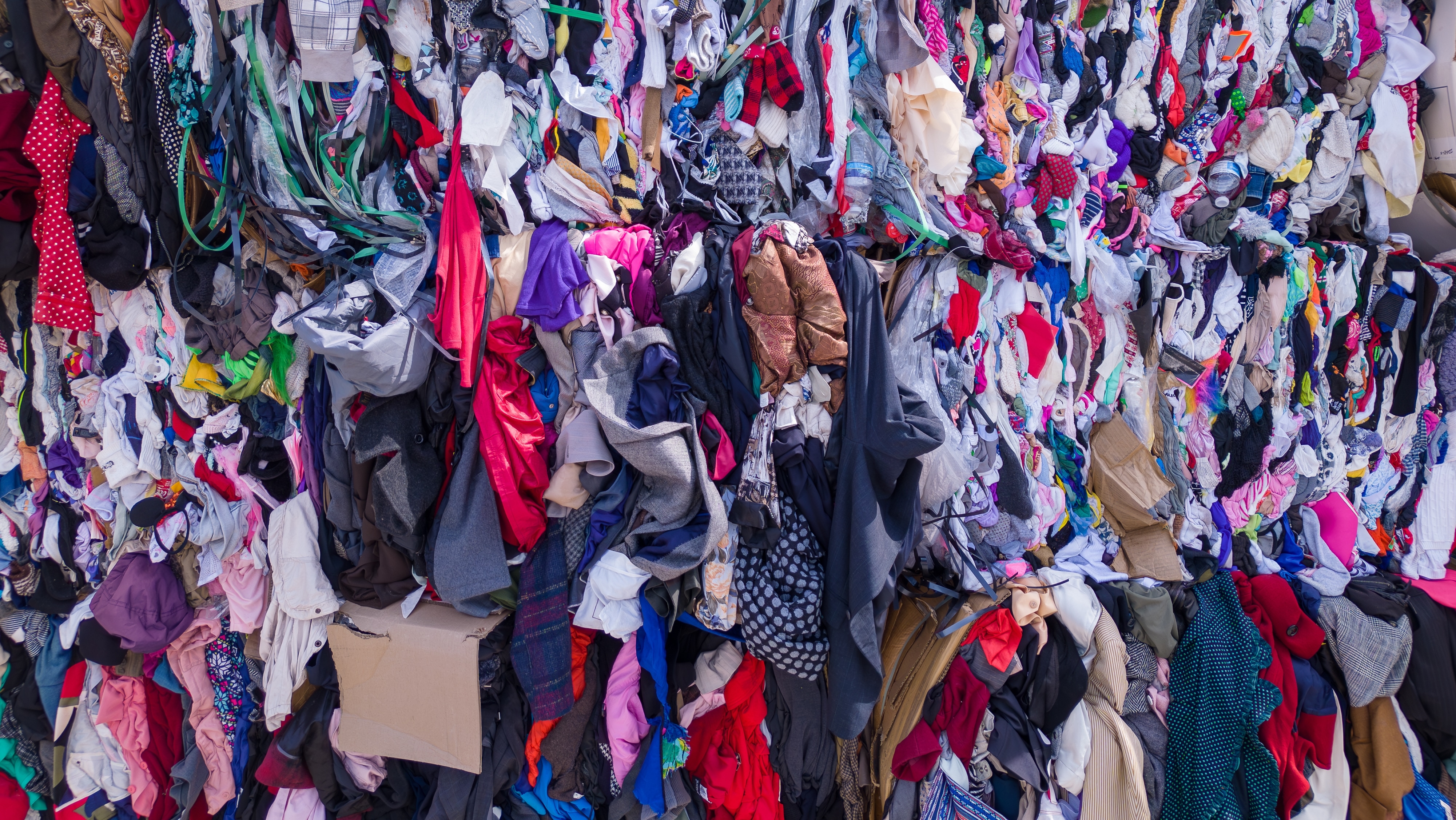
Garments often mix cotton with polyester, add colour, coatings and trims — and end up unrecyclable. With global textile waste piling up and climate goals tightening, innovators are looking for ways to make fashion circular – where fibres end up back on the production line, not in landfills.
In this edition of Burning Questions, Temasek’s Director, ESG, Investment Management, Wang Weixiang, and Paul Riley, Founder and CEO of Samsara Eco, share how enzyme-based recycling can help the industry close the loop — and what it will take to make circular fashion the norm.
What is the biggest myth about recycled fashion?
Weixiang: That used clothes are widely recycled. In fact, less than 1 per cent of textiles are recycled today. While blending materials for comfort or durability makes sense for manufacturers, once you mix different materials, they end up incinerated or in landfills, where they lead to carbon emissions, or leak microplastics and pollute soil. The vast majority of garments will remain hard to recycle, which is why we need innovative technologies like Samsara Eco’s to help overcome the challenge.
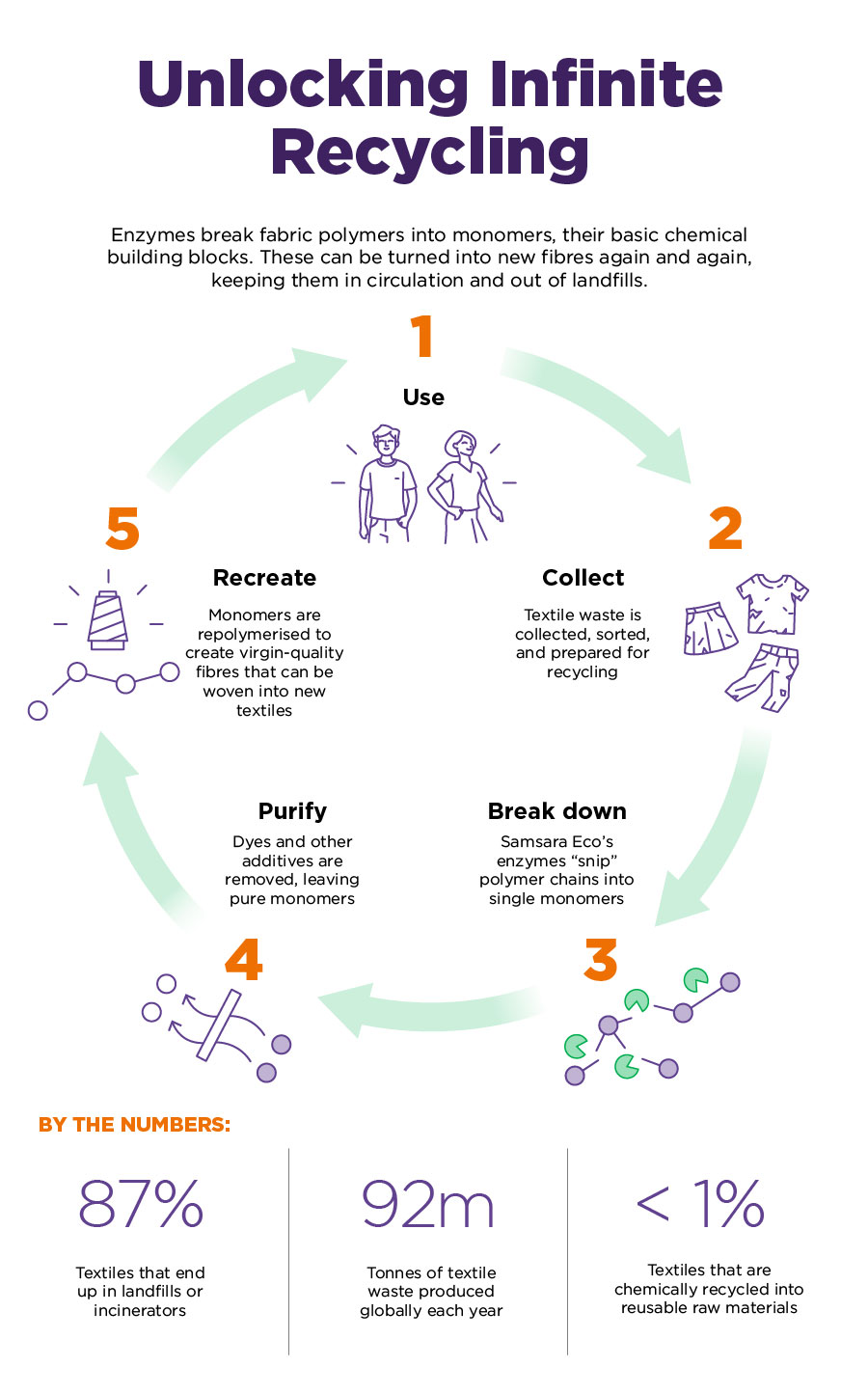
Paul: It’s a challenge that fashion has faced for the last 50 years. Most of what’s called “recycled content” in clothes actually comes from bottles, not other garments. Sustainability and fashion are almost mutually exclusive at the moment. What we’ve done is use AI and machine learning to design new-to-nature enzymes that can extract a garment’s original building blocks – the monomers. The enzymes have a very low carbon footprint and come at an acceptable price in the market.
What will it take to build a global market for textile-to-textile recycling?
Paul: It takes three things. First, a breakthrough technology that can actually recycle the mixed, coloured waste – and what we have is designed for that. Second, scale is decisive; we need many more facilities to process the 1.5 million tons that we ambitiously project. Third, design matters. If you make a nylon garment with a nylon zip, you can recycle the whole thing. Use a metal zip, and you can’t. I’m hopeful that over the next five to ten years, our technology will provide a solution for the fashion industry to achieve true circularity.
Weixiang: Technology is an important part of the equation. But to achieve adoption at scale, we also need the right investment climate, infrastructure, and demand from brands. At Temasek, we see our role as helping to catalyse that ecosystem – investing early, de-risking technologies, and connecting innovators with partners that can help them grow. If solutions like Samsara Eco succeed, this fundamentally reshapes how textiles are made and consumed, making textile recycling the norm, not a niche.
How have early investors enabled the sector to take the initial steps towards closing the loop?
Paul: Temasek has been with us from very early in our development and provided us not just with capital but also the resources and networks to help maximise the chances of our success. Without Temasek, I doubt we would be as advanced with our technology and our path to market as we are today.
Weixiang: We believe that by taking the lead, we can crowd in more partners and investors to bring about broader ecosystem-level change and impact. We saw that the team at Samsara Eco had both deep scientific capabilities and a bold vision for system-level transformation — if the clothes we wear are recyclable, it can fundamentally reshape the whole textile and fashion industry. We view our role as helping them scale through our capital, our networks, and by facilitating long-term partnerships.
What role can consumers play in closing the loop?
Paul: There’s a lot we can do. First, reduce – buy less. Then, reuse – second-hand fashion should be encouraged. Next, redesign – make garments that last and use recyclable materials. Then recycle. Those four elements make up an ecosystem that can deliver circularity and real climate benefits.
Weixiang: Most consumers would agree that recycling is probably the last thing on their minds when choosing clothes. Awareness matters — every purchase decision sends a signal. Brands can help by setting trends – when they make sustainability aspirational, consumers follow. This would reshape how textiles are made, how fashion is conceived by consumers, and how it is consumed. It’s not about one big leap, but small steps that move us forward together