Close

Burning Questions: The Infrastructure Powering Singapore’s Circular Future

Burning Questions: The Infrastructure Powering Singapore’s Circular Future

Minute Read 0 views

In brief

  • Singapore’s waste volumes continue to rise while available landfill space shrinks

  • Much of what households place in recycling bins is rejected due to contamination and ends up being incinerated

  • Waste-to-energy plants safely treat what cannot be recycled, while generating electricity and recovering materials that would otherwise be lost

Singapore’s seamless waste management system reflects a tougher reality: finite landfill capacity and rising volumes of non-recyclable rubbish. Waste-to-energy, together with emerging technologies such as carbon capture and ash reuse, offers a pathway toward a more circular and resilient waste ecosystem.

In Singapore, rubbish leaves homes quickly. A bag is tied, sent down a chute or to a bin centre, collected on schedule, and rarely thought about again. That ease can make waste invisible, even though every load must still be handled somewhere beyond the chute.

For a dense city-state with limited landfill capacity, the question is how to manage waste responsibly as consumption rises and the need to reduce our environmental footprint becomes more pressing. 

Wang Weixiang, Director, ESG Investment Management, Temasek, and Jackson Goh, Managing Director (Environment) of Keppel’s Infrastructure Division, answer your Burning Questions on how innovative technology is shaping a more circular, environmentally-sound waste system.

Waste-to-energy checks two boxes: it cuts landfill waste and reduces the fossil fuel needed for electricity.

Wang Weixiang, Director, ESG Investment Management, Temasek

Waste seems to disappear so effortlessly in Singapore – what are we not seeing?

Weixiang: 

Waste doesn’t simply vanish – behind Singapore's clean streets lies a highly engineered system. National recycling programmes are part of this system. Unrecyclable waste is sent to waste-to-energy plants, where it is incinerated. What we don’t see is the massive infrastructure, energy consumption, and environmental trade-offs required to maintain this system – an approach that is efficient but resource-intensive. 

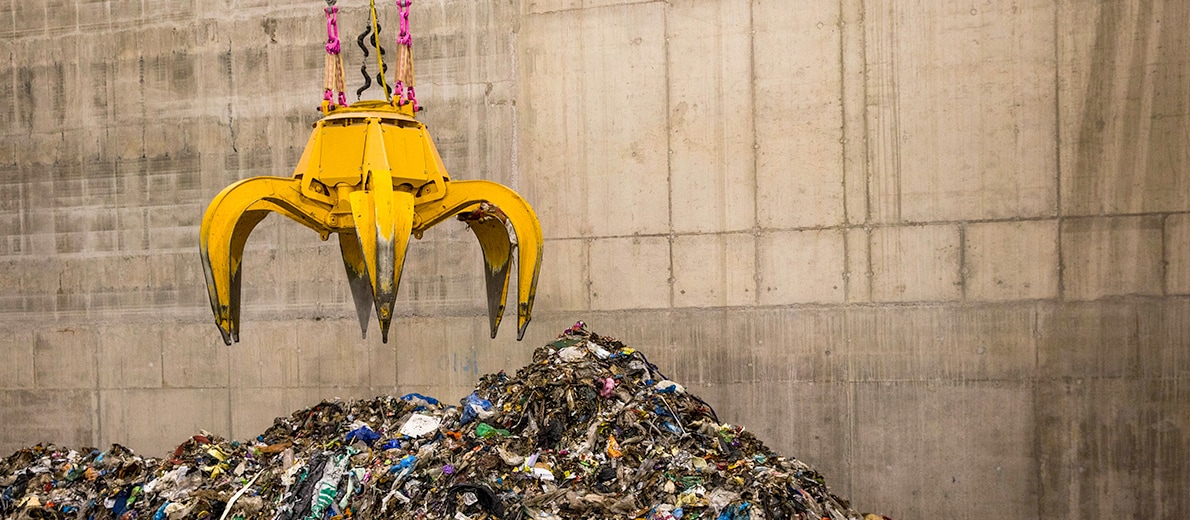
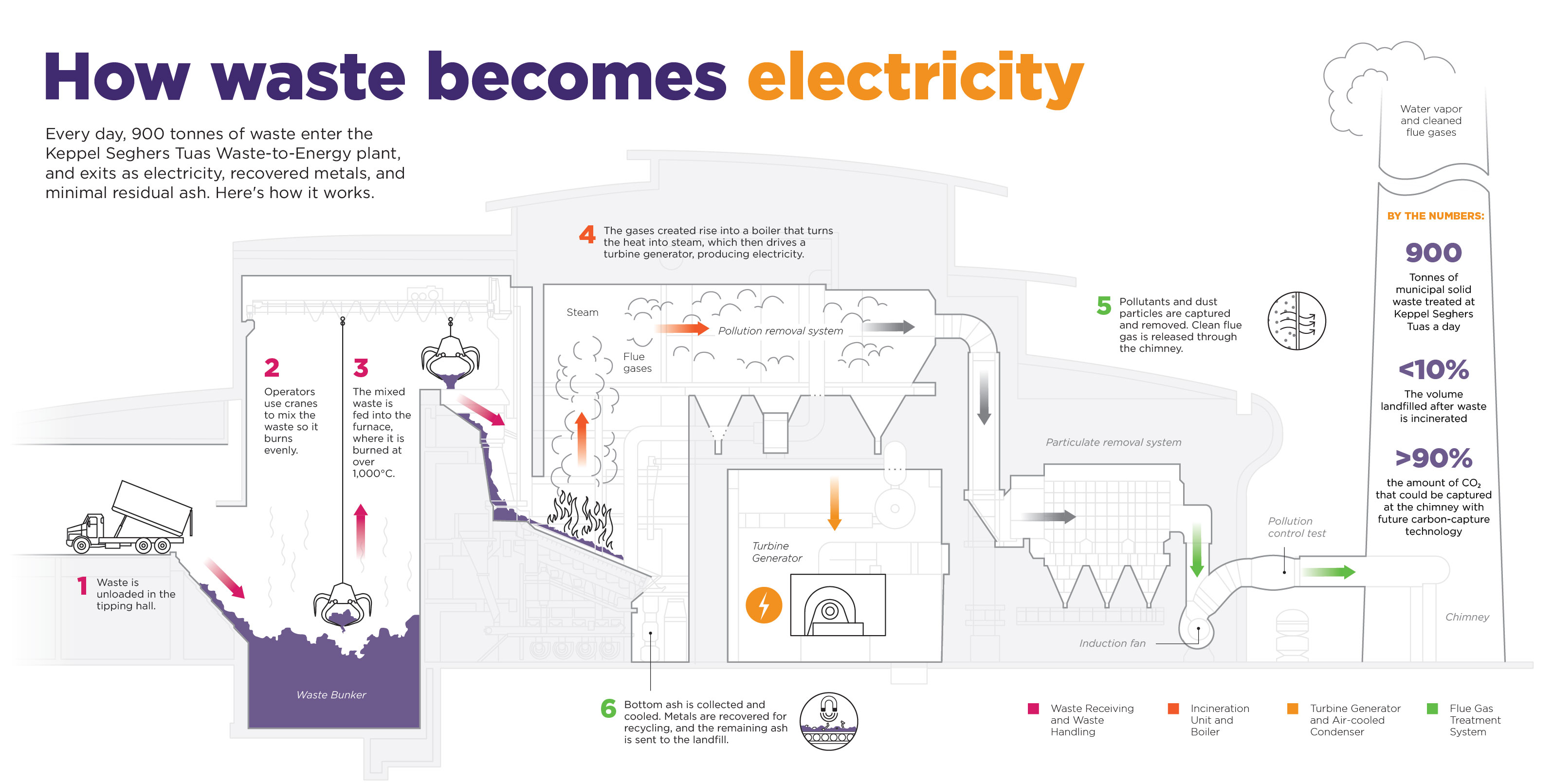
Jackson: That’s the part people rarely see. Behind the chute is a full treatment chain, and waste-to-energy is a key part of the waste treatment process. Incineration shrinks the volume of non-recyclables by more than 90%, allows us to generate electricity from heat, and lets us recover metals from the ash. Only the remaining ash goes to Pulau Semakau, but the landfill has a finite capacity. That’s why reducing and recovering as much as possible is so important, especially for a land-scarce city like Singapore. 

Why do we still end up incinerating so much? Can’t we simply recycle?  

Jackson: At the plant, what we see is that contamination is one of the biggest reasons why recyclable items fall out of the recycling system. If a bottle or jar still contains food or liquid, the whole batch can be rejected, and it ends up here instead. People also struggle with what can or cannot be recycled. When items are clean, there is a higher chance that they remain in the recycling stream.

Weixiang: That’s why awareness and education matter. Clean materials stay in the recycling loop; mixed or dirty items fall out of it. So the more clearly people understand what to recycle, how to prepare it, and why it matters, the more effective the whole system becomes. 

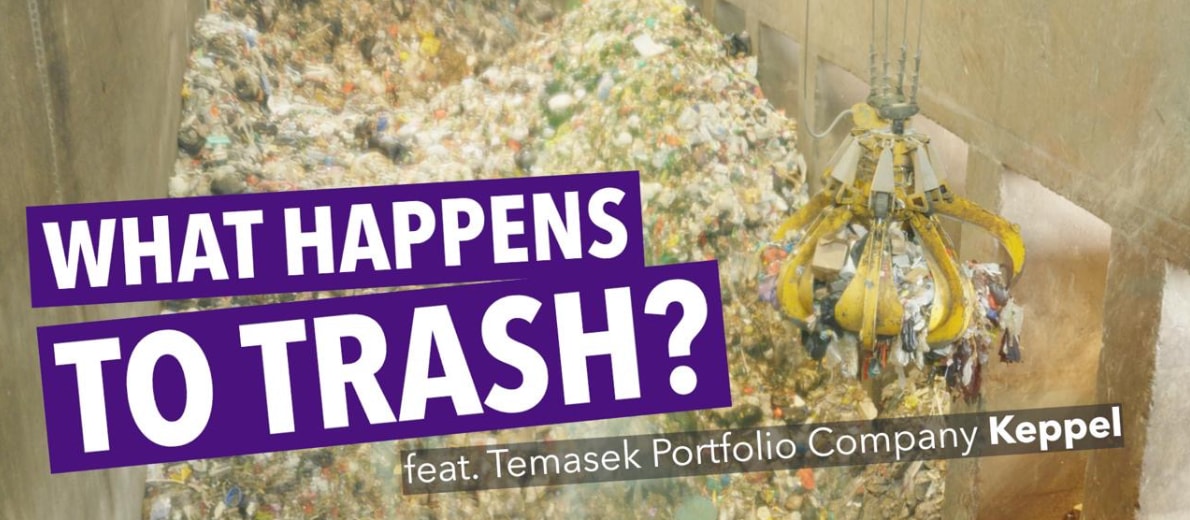
What actually happens inside a waste-to-energy plant? 

Beyond generating electricity, how does waste-to-energy support a more circular system? 

Jackson: Waste-to-energy is not just treatment for disposal – it’s recovery. We recover energy first. Then, from the bottom ash, we extract metals for recycling. We are also studying how to treat the ash so it can be used as aggregate in building materials instead of going to the landfill, providing another avenue for reuse. Keppel has applied similar technology in Europe, China, Australia, and the Middle East – the core idea is the same: reduce landfill use and recover as much material as possible. 

Weixiang: Circularity is about using resources more responsibly. Waste-to-energy handles the part we cannot meaningfully recycle, while still recovering value from it. As new technologies for ash treatment or emissions reduction mature, we can close more loops and further reduce pressure on landfills. 

What role do companies and investors play in making waste systems more sustainable? 

Jackson: Temasek is one of our key shareholders, and it encourages the companies it invests in – including Keppel – to become more sustainable. For us, that means aligning our business with long-term environmental goals while continually innovating to serve the industry’s needs. We also work with key partners such as the National Environment Agency (NEA), and these partnerships help us move the wider ecosystem forward.  

Weixiang: Reducing and reusing often start with individuals, but recycling and resource recovery require a broader ecosystem – robust infrastructure, advanced technology, and organisations that can enable these processes. That’s where investors play a critical role. At Temasek, waste management and circularity are an integral part of our Nature Roadmap, reflecting our commitment to adopting Nature Positive business models and practices. We focus on solutions that divert waste from landfills, avoid emissions, reduce landfill pressure, and reduce reliance on fossil fuels – and that are practical and financially viable to scale. When those conditions align, we can manage risks, capture opportunities, and drive systemic change that benefits both the environment and the economy. 

Looking ahead, what might waste-to-energy look like in 20 years – and could it help us reach net zero? 

Jackson: Technology will change what waste-to-energy can do. We’re already studying how to integrate carbon capture with our plants – we’ve run feasibility studies in Singapore and the UK, and early results show we could capture more than 90% of the CO₂ at the chimney. If that CO₂ is stored or put to use, the system could move towards net-zero – or even net-negative.  

Weixiang: From an investment perspective, this is why we stay focused on long-term, scalable solutions. As carbon-capture technologies advance and costs come down, integrating them into essential infrastructure like waste-to-energy plants becomes increasingly more realistic. The potential is significant: reducing emissions, extending the life of landfills, and recovering more value from the same waste stream. These benefits compound over time – supporting climate goals, conserving resources, and building resilience across the system. That’s the kind of transformation we look for when investing for a sustainable future.

Top

News & Insights

Select a type of content
    Please select Stories you are interested in.
    Please give us your consent.
    Please confirm that you are not a robot.

    Subscribe to our newsletter

    Stay up to date with our latest news, insights and stories

    Select a type of content
      Please select Stories you are interested in.
      Please give us your consent.
      Please confirm that you are not a robot.